Showing posts with label Akathisia. Show all posts

Tuesday, November 20, 2018

The Agonizing Nightmare of Drug-Induced Akathisia


madinamerica
J.A. Carter-Winward


Nov 18, 2018

The pain assessment chart. We’ve all seen it on the wall in the ER, the doctor’s office.

I remember laughing at it when I first saw it in the local pain clinic in October of 2017. I’d gone in to get deep Botox injections in my neck — 24 of them — for my seized neck muscles, one of the many neurological conditions caused by psychiatric medications.

It was October 2017, and I’d been off the offending medication, Latuda, for over a year. Latuda is one of many “new generation” atypical antipsychotics that, once upon a time, were only given to the “severely mentally ill.” Atypical antipsychotics were FDA-approved for bipolar disorder, bipolar depression, treatment-resistant depression, and unipolar depression. They are also routinely prescribed by all manner of physicians to treat insomnia, postpartum depression, PTSD, and other mental and physiological disorders.

I pointed to the pain scale and said to my husband, “I wish ‘10’ and ‘bed rest required’ was my ‘worst possible pain.’” He agreed. I looked at the pain scale in the pain clinic with no small amount of anger and feelings of loss and betrayal because by that time, I’d been to see four doctors — three neurologists and one ER doctor — all of whom didn’t, and don’t, believe I was in pain when I came in to see them.

Which, looking back, seems odd to me. They (doctors) believed me when, in the 1990s, a CT scan showed I’d sustained a concussion and whiplash after being violently assaulted. They believed me when I presented with all the symptoms of a traumatic brain injury (TBI) and was experiencing depression as well as cognitive difficulties — things I’d never before struggled with — consistent with a TBI, such as a substantial loss of executive functioning. They believed me when I said I felt myself heading for a brick wall physically and emotionally. They took my word for it and gave me more and more medications to try to stop the collision.

Fast-forward years later:

In 2016, after years of suffering with an extrapyramidal side effect caused by the medications they gave me beginning in 2004, I told these three neurologists and the ER doctor the name of my suffering: akathisia. The bastard child of psychiatric medications that no one wants to claim. I knew the name because my former psychiatrist and neuropsychologist diagnosed me and told me to see a neurologist. They took one look at me and all but ordered me to the ER. They assured me the physician there would admit me, and I’d get a full neurological workup. I didn’t want to go, even though I finally knew why I was feeling this pain. A drug side effect? Unbelievable. 


I couldn’t believe a medication could cause something so completely disabling — a pain that blurred the lines between emotional and physical: the type of pain you feel when you can’t eat after a horrific loss or trauma. Pain that ground inside me every day, without a reprieve. How bad is the pain? The following is a short YouTube film I wrote and produced. It shows you just how bad the daily pain can be. And how the “good” medications we’re given caused it.

I’d been told it was my “illness,” so I battled shame, guilt, and daily thoughts of ending my own life due to how agonizing it had become. The pain seemed to center right in my solar plexus, and it was so unrelenting, I was almost entirely homebound. My career as a public figure dwindled to a whisper. My world, our world, had shrunk from a panoramic window of infinite possibility and adventure to a peephole.

The Pain, as I called it, was not depression, not anxiety, and it wasn’t a worsening of an underlying mental illness, as I’d been told. I’d been treated successfully with talk therapy for depression as a teen. I knew “depression.” I’d had some anxiety and knew how to deal with that well enough. But when I began taking antipsychotics, the pain I experienced was something else altogether, and I knew it.

“Akathisia: restlessness and feeling like you can’t sit still, right?” Not quite. Not entirely. That’s like saying “Ah, cancer. So, losing some weight, are you?”

But when I told these four doctors I had drug-induced akathisia, and it was tardive, acute, chronic, and getting worse — when I told them how akathisia presented in me and for me subjectively, because there is a “subjective component” of akathisia that’s been documented, which all four acknowledged…

They did not and do not believe me.

I’m not even sure my current doctors believe me. I think they believe *I* believe I am experiencing “real or perceived pain.” But they don’t fully believe it’s the neurological movement disorder, akathisia. This begs the question:

When did my credibility suddenly disappear? And why?

It’s simple, really. I lost credibility when they misdiagnosed me in the 1990s with a mental illness after I sustained the TBI. In other words: They stopped believing me when I chose to believe them.
* * *

When they ignored the classic TBI symptoms with which I presented at the county-run, sliding-fee mental health facility back in 1996, the only care I could afford with no insurance, they went with the easier diagnosis: “bipolar disorder.” The other obvious issues I faced didn’t fit their categories.

I couldn’t google symptoms of a brain injury in 1996, and I had no financial help. All I had was implicit trust in doctors, something my parents handed down to all of us, and why I have a disproportionate number of doctors in my family, I’d wager. In the world in which my parents had grown up, doctors were akin to clergy: sacrosanct, and impervious to baser human frailties.

They asked me questions at the mental health clinic, and I offered up the other symptoms that had caused me to lose jobs, and flunk out of college because my professors suddenly spoke in “word salads.” Panic gripped me as I watched my once off-the-charts reading comprehension dissolve into an inability to follow a simple cake recipe. But they didn’t want to hear about those symptoms. Instead, they misdiagnosed me, and I believed them, because they were supposed to know more than I did.

In the last 2+ years, I’ve been searching for help, specifically from neurologists, since “neurological” is right there in my diagnoses. I have what is called DIMDs, or drug-induced movement disorders, and they are neurological. Most recently, my dystonia has advanced. It is now beginning to affect not only my ability to swallow, it has progressed to the point where my respiratory muscles can, and have, seized up. When this happens, I cannot breathe. I literally feel as though I’m suffocating. And as it progresses? I could.

But I no longer feel safe going to a new doctor, nor the hospital. That’s because the three neurologists and one ER doctor we saw told us, and wrote in their clinical notes, that I am psychosomatically ill.

Each doctor wrote in my chart, to be seen by every healthcare provider I see “in-network,” that I have Conversion Disorder, now known as FND — functional neurological disorder — and that I should be evaluated by a mental healthcare professional/specialist.

They all said that the subjective “pain” caused by akathisia, the pain I experience, is not neurological. Doesn’t “subjective” mean it’s different for everyone? Yet their unilateral diagnoses, which relied on my health history and their clinical, subjective opinions, have been validated by their white coats.

Further, two of the neurologists suggested that I had features of a Cluster B Personality Disorder. In case you’re not familiar, these include Borderline, Histrionic, Narcissistic, and Antisocial Personality Disorder. The Cluster B’s are characterized by emotional instability, cries for attention, unstable self-concept, and by being overly dramatic, pathologically dishonest, manipulative, and lacking empathy for others, among other “features.” In other words, the neurologists all concur that I am the most unreliable “narrator” of my own subjective experience and pain.

One neurologist, who seemed extremely hyper-focused on my need to see a “mental health specialist,” wrote that I should be evaluated specifically for Borderline Personality Disorder. Because they are not “mental healthcare specialists,” they are not qualified to diagnose me themselves, despite obliquely doing exactly that.

After they all cast doubt on the reality of my pain with what they wrote in my chart, they all concurred that I have drug-induced neurological movement disorders: tardive akathisia, dystonia, dyskinesia. They also confirmed the TBI. An MRI of my neck a year ago (before the Botox shots) confirmed the herniated discs in my C-spine, but the injuries were not new. Had I been in a car accident 20+ years ago? asked the pain-clinic doctor.

But what the neurologists categorically deny is that akathisia is “painful” — specifically, “subjectively, emotionally painful.”

One neurologist, the second one I saw, wrote a redundant narrative throughout my chart about my emotional “instability,” and suggested the BPD “evaluation.” Usually it takes a while for even a therapist to make that call. He diagnosed it, wrote it in my chart, despite the fact that he knew I am currently in therapy and have been most of my adult life, due to the trauma of sustaining a TBI in a violent assault, but also dealing with what we now know to be the direct result of iatrogenic harm.

Yet, he told us akathisia does not cause feelings so painful that they can lead to suicide.

“Sure. Akathisia does cause some ‘restlessness’ and that can be ‘uncomfortable…’ but akathisia is a motor dysfunction characterized by… and it does not ‘cause’ suicidal feelings…”

The pain of akathisia is worse than anything I’ve ever experienced in my life. I’d rather go through natural childbirth, daily. Yet Dr. “Uncomfortable” then told me my movements weren’t “consistent with akathisia presentation.” He proceeded to dance like a belly dancer in his chair, “showing” us what akathisia looks like. We left, and I was in tears. I was worried that perhaps I was mentally unstable. He gave us patient handouts about akathisia. Dr. Uncomfortable showed us an adorable belly-dance routine while my body shook and jittered exactly as his patient handout described.

My account was the same as I spoke to these doctors, varying only a little, because how does one purport to describe the indescribable? I’m a writer by trade, so, I used my skills to convey the pain of the persisting akathisia to each doctor and neurologist this way:

Take every horrific feeling you’ve ever had in your life, all at once. Now, times them by 200, right in your gut. The “my-mother-just- died-and-so-did-my-cat-and-my-wife-left-me-for-my-best-friend” feeling. On top of those? A feeling of terror, panic, fear, as if you LIVE in a horror movie, and you must do something, or everyone you love will die, YOU will die — and you’ve no clue what that “something” is. So sick with this pain, caused by this neurological condition… so sick from it you can barely eat. That is how akathisia pain feels. It’s how it feels to me, and countless others who are experiencing it, or who have.

And they have all methodically undermined my credibility in my permanent record — a medical maligning that could cost me my life.

Because if it’s emotional, then it’s my fault. My problem. My issue. When, in fact, my symptoms were not present before they gave me the medications in the first place. Hardly a causal link in the world of science. But when I walked into their offices? I was not suicidal.

Yet, all I had to do was tell them I was in emotional pain when I walked into the doctor’s offices in the 90’s, then again in 2004, and they believed me enough to give me dopamine-altering medications that can, and have, caused permanent damage to my brain.

And this is because they do not know, and rather than admit that, they dispute my subjective experience, and the experience of countless others, and add “mental health” determinations they are not qualified to make based on less than 30 minutes of face-time. A personality disorder. And according to their criteria and the general definition of Cluster B Personality Disorder they adhere to from the DSM-5, symptoms must:
not be due to another disorder
not be due to an isolated stressful situation

Well, they’re right about one thing: It isn’t due to only one, isolated stressful situation — not anymore. The TBI from having my head bashed into a car by someone I once trusted? That was only the first of many blows to come.

The first neurologist I saw in Salt Lake City is a specialist in movement disorders. After telling me there was no viable treatment for them, specifically akathisia, she went on to write this characterization of akathisia and its subjective component:

“Tardive akathisia . . . most often associated with antipsychotic drugs, which antagonize dopamine receptors. The subjective component can be characterized by the aforementioned restlessness, as well as tension, panic, irritability and impatience.”

Along with this, she wrote her impressions of me, impressions that seem particularly callous and paradoxical, given her diagnoses:

“PHYSICAL EXAMINATION: General. Extremely frustrated, anxious and at times tearful woman.”

Two weeks prior to seeing her, I had lost my ability to walk normally, had begun to move involuntarily, was developing aphasia (an inability to understand or express speech), and let’s not forget The Pain — akathisia — a pain so horrific I wanted to die to escape it.

Yes, when she told us she had nothing to offer, I was upset, emotional, and began to sob in the exam room. With no answers, no hope in sight, I behaved exactly how a person who had sustained a TBI would behave; exactly how someone who suffered from the neurological disorders each doctor diagnosed me with (including rapid-onset dystonia) would behave. According to the Dystonia Medical Research Foundation’s website:
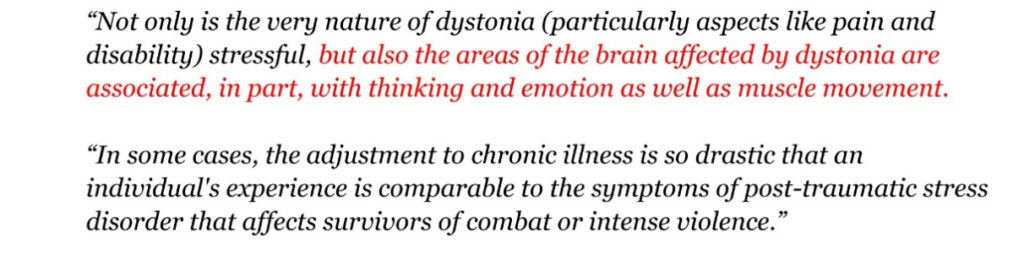
Finally, I behaved exactly how any human being would behave and react when told there is no treatment, no cure, no hope, and that her pain is not real, not physiological, but an emotional and mental health issue.

My brain injury has impacted me for over 20+ years, and I did not know it. I had suffered from drug-induced akathisia for 12+ years and did not know it. My dopamine has been dysregulated by medications, and yet they told me that akathisia could not cause subjective emotional pain, despite the role dopamine plays in our brains’ control centers for all our physiology — including our emotional states.

And if I suddenly can’t breathe due to a dystonic seizure of my respiratory muscles again, and it’s worse than the last attack? I can’t call for help. Even if I make it to the ER, it’s possible a nurse or doctor there will read through my chart and see, hidden in the medical language of those who have made their arbitrary dismissals: “Unstable, unsound. Don’t believe her.” And as I slowly suffocate, they could very well pat me on the head and tell me to calm down while they go find a sugar pill.

Well, at least a sugar pill won’t make my akathisia worse.

The article on “Talking to Your Doctor About Pain” that arrived in my Inbox the other morning made me bark a laughter as bitter as my chicory-laced coffee. It suggested that we don’t “shy away from ‘flowery language’ to describe [our] pain.” Flowery language? I’ve written a whole book of flowery language: flowery, plain, in-your-face-obscene language, medically accurate and appropriate language, all describing akathisia pain. I tried flowery. But my doctors didn’t hear it. They searched for categories in which to place me. And they’ve succeeded.

After the premier of my “How Bad Can Good Be” video, messages and emails came pouring into our site’s contact form (akathisia.life — the website my husband put up to help bring awareness to those who don’t have the resources we do). The messages all had horror stories, more horrific even than mine, and the single, common thread within the messages, from those who are suffering with akathisia:

“Thank you for writing the feelings I couldn’t express and conveying the horror I feel every day.”

My film has been shared on social media (it now has over 10k views on Facebook alone), and one chilling tagline was simple, and terrible, in its implications:

“It has a name.”

And now it also has a face. To capture the horrifying pain of akathisia, I created a painting with charcoal and photo collage: 


“Akathisia: It Has a Name,” photo collage and charcoal by J.A. Carter-Winward

This is my worst pain, far beyond “bed rest required.” Tell me, does the image above convey simply “uncomfortable” to you?

I’m going on 14+ years now with drug-induced, now tardive, chronic akathisia. As I’ve searched for a neurologist to be on my “care team” to help me deal with the drug-induced movement disorders, specifically help with ways to deal with the progression of drug-induced dystonia, they brush me off.

More to the point, they brush akathisia off. “Uncomfortable,” remember? Not so painful you want to end your life. Not so horrific you might take someone else’s with you to the other side. No. Uncomfortable.


If I were as “emotionally unsound” as they say in my medical chart, I’d say it’s almost like they want me to end my life, so they can write it off as “another tragic suicide caused by mental illness.”

Only, I’m not mentally ill, based on their own criteria. The only mental health issues with which I currently deal? The trauma of iatrogenesis and living, every day, with these conditions created by medications as I fight for my life.

Sorry, Doctor Uncomfortable and Co. I’m not going anywhere. And your patients? We are reading the same studies as you — and more. Because your motivation is to keep the status quo, aka your jobs, your relevance, your authority. So, you will only seek out studies that support what you believe. Call it confirmation bias, call it professional and publication bias, it’s all the same stuff. Our motivation? We want you to hear us, help us, and tell us what we do NOT know. Admit what you cannot do, and then do your jobs. HEAL. You broke it: fix it. And only pressure from you, the “dealers,” will change the way pharmaceutical companies create and market medications.

Our pain is real. And too many medical professionals have actually caused it by their willful ignorance, coupled with blind, medical arrogance. Yes, it takes two to form a lie: we are complicit. We want professionals to have the answers, so we give them the answers they need to give us our labels, medicate us, so we can go on with our lives. But the lies are killing us.

And when we begin trusting ourselves, and arming ourselves with the facts and studies coming out of Europe (the more-evolved cluster of First-World countries who provide universal healthcare to their citizenry), we will defer to them, because they are not motivated by the greed that riddles the polluted, crooked, for-profit healthcare system in the U.S.

For any of you who have taken medications that cause akathisia, arm yourselves with facts. You can google. Look it up. You’ll officially know more than most neurologists.

Watch my video. Look at the website for akathisia info. Read Robert Whitaker’s book, Mad in America, and the others out there who are trying to wake you up. We are trying to save your lives.

Then share what you learn like your life depends on it.

Because statistically… someone’s life does.

And yes, it will be uncomfortable. Challenging accepted wisdom usually is.

But look into the “face” of that pain, above. I promise you: Confronting your doctor with your truth isn’t nearly as “uncomfortable” as a pain that invades your entire being, finds every soft and vulnerable place within you, and rips it out with its teeth as you watch in horror…

Because “it” isn’t holding the gun to your head, or stringing the rope up in the rafters:

It’s you.

Flowery enough for you?


Previous articleTrauma Outside the Box: How the ‘Trauma-Informed’ Trend Falls Short
Next articleStudy Finds Deteriorating Mental Health Among Poor White Americans
J.A. Carter-Winward
https://www.jacarterwinward.com/akathisia


J.A. Carter-Winward is an award-winning poet, literary novelist, playwright, performer, and visual artist. Through 14 years of drug-induced akathisia, she authored 13 books. Off the medications seven months, she developed a cluster of neurological movement disorders that impact every facet of her life as a writer, public figure, and human being. Her upcoming collection, in-her-rest-less-ness: prose and poems, is a chronicle spanning 14+ years, written before she knew her suffering had a name.


Thank You Ms Carter-Winward and MIA.

Tuesday, November 15, 2016

H4640: Congressman Jolly's Bill: Veteran Suicide Prevention Act

Introduced earlier this year by Congressman David Jolly


Are you electing advocates of buying More of the suicide and violence causing agent (mental health drugs and psychiatric/psychological bullshit)? 

Get Vets hooked up with other Vets who've been there, done that. The track record of Mental Health Professionals is beneath contempt. 

We strongly recommend you contact your US Representatives asking them to support Congressman Jolly's Bill and your US Senators to support Senator McCain's Bill in this matter.

govtrack

The text of the bill below is as of Feb 26, 2016 (Introduced).

Source: GPO

114th CONGRESS

2d Session

H. R. 4640

IN THE HOUSE OF REPRESENTATIVES

February 26, 2016

Mr. Jolly (for himself, Ms. Titus, Mr. Abraham, and Ms. Gabbard) introduced the following bill; which was referred to the Committee on Veterans’ Affairs

A BILL

To direct the Secretary of Veterans Affairs to conduct a review of the deaths of certain veterans who died by suicide, and for other purposes. 1.

Short title

This Act may be cited as the Veteran Suicide Prevention Act. 2.

Department of Veterans Affairs review of certain veterans’ deaths by suicide (a)

Review required

Not later than 18 months after the date of the enactment of this Act, the Secretary of Veterans Affairs shall complete a review of the deaths of all covered veterans who died by suicide during the five-year period preceding the date of the enactment of this Act. Such review shall include— (1)

the total number of veterans who died by suicide during the five-year period preceding the date of the enactment of this Act; (2)

a summary of such veterans that includes the age, gender, and race of such veterans; (3)

a comprehensive list of the medications prescribed to, and found in the systems of, such veterans at the time of their deaths, specifically listing any medications that carried a black box warning, were off-label, psychotropic, or carried warnings that included suicidal ideation; (4)

a summary of medical diagnoses by Department of Veterans Affairs physicians which led to the prescribing of the medications referred to in paragraph (3); (5)

the number of instances in which the veteran who died by suicide was concurrently on multiple medications prescribed by Department of Veterans Affairs physicians; (6)

the percentage of veterans who died by suicide who were not taking any medication prescribed by a Department of Veterans Affairs physician; (7)

the percentage of veterans referred to in paragraph (1) with combat experience or trauma (including, but not limited to military sexual trauma, traumatic brain injury, and post-traumatic stress); (8)

Veteran Health Administration facilities with markedly high prescription and suicide rates of patients being treated at those facilities; (9)

a description of Department of Veterans Affairs policies governing the prescribing of medications referred to in paragraph (3); (10)

any patterns apparent to the Secretary based on the review; and (11)

recommendations for further action that would improve the safety and well-being of veterans. (b)

Public availability

Not later than 30 days after the completion of the review required under subsection (a), the Secretary shall— (1)

submit to Congress a report on the results of the review; and (2)

make such report publicly available. (c)

Covered veteran

In this section: (1)

The term covered veteran means any veteran who received hospital care or medical services furnished by the Department of Veterans Affairs during the five-year period preceding the death of the veteran. (2)

The term black box warning means a warning displayed within a box in the prescribing information for drugs that have special problems, particularly ones that may lead to death or serious injury. 


Thank you Congressman Jolly, govtrack, and Dr Hickey.

S 3410: Veteran Overmedication Prevention Act of 2016

Here's the text of Senator McCain's Bill,


to force the Veteran's Administration to study and publish the problems pointed out by Dr Hickey in his article at madinamerica: Psychiatric Drugs Causing Violence and Suicide among Veterans.

govtrack

The text of the bill below is as of Sep 28, 2016 (Introduced).

Source: GPO


II

114th CONGRESS

2d Session

S. 3410

IN THE SENATE OF THE UNITED STATES

September 28, 2016

Mr. McCain introduced the following bill; which was read twice and referred to the Committee on Veterans' Affairs

A BILL

To direct the Secretary of Veterans Affairs to conduct an independent review of the deaths of certain veterans by suicide, and for other purposes. 1.

Short title

This Act may be cited as the Veteran Overmedication Prevention Act of 2016.

Sec 2. Department of Veterans Affairs independent review of certain deaths of veterans by suicide (a)

Review required 


(1) In general

Not later than 90 days after the date of the enactment of this Act, the Secretary of Veterans Affairs shall seek to enter into an agreement with the National Academies of Sciences, Engineering, and Medicine under which the National Academies shall conduct a review of the deaths of all covered veterans who died by suicide during the five-year period ending on the date of the enactment of this Act. (2)

Alternate organization (A)

In general

If the Secretary is unable to enter into an agreement described in paragraph (1) with the National Academies of Sciences, Engineering, and Medicine on terms acceptable to the Secretary, the Secretary shall seek to enter into such an agreement with another appropriate organization that— (i)

is not part of the Federal Government; (ii)

operates as a not-for-profit entity; and (iii)

has expertise and objectivity comparable to that of the National Academies of Sciences, Engineering, and Medicine. (B)

Treatment

If the Secretary enters into an agreement with another organization as described in paragraph (1), any reference in this section to the National Academies of Sciences, Engineering, and Medicine shall be treated as a reference to the other organization. (3)

Elements

The review required by paragraph (1) shall include the following: (A)

The total number of covered veterans who died by suicide during the five-year period ending on the date of the enactment of this Act. (B)

The total number of covered veterans who died by a violent death during such five-year period. (C)

The total number of covered veterans who died by an accidental death during such five-year period. (D)

A description of each covered veteran described in subparagraphs (A) through (C), including age, gender, race, and ethnicity. (E)

A comprehensive list of prescribed medications and legal or illegal substances as annotated on toxicology reports of covered veterans described in subparagraphs (A) through (C), specifically listing any medications that carried a black box warning, were prescribed for off-label use, were psychotropic, or carried warnings that included suicidal ideation. (F)

A summary of medical diagnoses by physicians of the Department of Veterans Affairs or physicians providing services to covered veterans through programs of the Department that led to the prescribing of medications referred to in subparagraph (E) in cases of post-traumatic stress disorder, traumatic brain injury, military sexual trauma, and other anxiety and depressive disorders. (G)

The number of instances in which a covered veteran described in subparagraph (A), (B), or (C) was concurrently on multiple medications prescribed by physicians of the Department or physicians providing services to veterans through programs of the Department to treat post-traumatic stress disorder, traumatic brain injury, military sexual trauma, other anxiety and depressive disorders, or instances of comorbidity. (H)

The number of covered veterans described in subparagraphs (A) through (C) who were not taking any medication prescribed by a physician of the Department or a physician providing services to veterans through a program of the Department. (I)

With respect to the treatment of post-traumatic stress disorder, traumatic brain injury, military sexual trauma, or other anxiety and depressive disorders, the percentage of covered veterans described in subparagraphs (A) through (C) who received a non-medication first-line treatment compared to the percentage of such veterans who received medication only. (J)

With respect to the treatment of covered veterans described in subparagraphs (A) through (C) for post-traumatic stress disorder, traumatic brain injury, military sexual trauma, or other anxiety and depressive disorders, the number of instances in which a non-medication first-line treatment (such as cognitive behavioral therapy) was attempted and determined to be ineffective for such a veteran, which subsequently led to the prescribing of a medication referred to in subparagraph (E). (K)

A description and example of how the Department determines and continually updates the clinical practice guidelines governing the prescribing of medications. (L)

A description of the efforts of the Department to maintain appropriate staffing levels for mental health professionals, such as mental health counselors, marriage and family therapists, and other appropriate counselors, including— (i)

a description of any impediments to carry out the education, training, and hiring of mental health counselors and marriage and family therapists under section 7302(a) of title 38, United States Code; (ii)

with respect to mental health counselors, marriage and family therapists, and other appropriate counselors, an identification of resolutions for— (I)

any standardized cre­den­tial­ing discrepancies; and (II)

any impediments to the development of an internship training program; (iii)

an assessment of the development by the Department of hiring guidelines for mental health counselors, marriage and family therapists, and other appropriate counselors; and (iv)

a description of how the Department— (I)

identifies gaps in the supply of mental health professionals; and (II)

determines successful staffing ratios for mental health professionals of the Department. (M)

The percentage of covered veterans described in subparagraphs (A) through (C) with combat experience or trauma related to combat experience (including military sexual trauma, traumatic brain injury, and post-traumatic stress). (N)

An identification of the medical facilities of the Department with markedly high prescription rates and suicide rates for veterans receiving treatment at those facilities. (O)

An analysis, by State, of programs of the Department that collaborate with State Medicaid agencies and the Centers for Medicare and Medicaid Services, including the following: (i)

An analysis of the sharing of prescription and behavioral health data for veterans. (ii)

An analysis of whether Department staff check with State prescription drug monitoring programs before prescribing medications to veterans. (iii)

A description of the procedures of the Department for coordinating with prescribers outside of the Department to ensure that veterans are not overprescribed. (iv)

A description of actions that the Department takes when a veteran is determined to be overprescribed. (P)

An analysis of the collaboration of medical centers of the Department with medical examiners’ offices or local jurisdictions to determine veteran mortality and cause of death. (Q)

An identification and determination of a best practice model to collect and share veteran death certificate data between the Department of Veterans Affairs, the Department of Defense, States, and tribal entities. (R)

An assessment of any patterns apparent to the National Academies of Sciences, Engineering, and Medicine based on the review conducted under paragraph (1). (S)

Such recommendations for further action that would improve the safety and well-being of veterans as the National Academies of Sciences, Engineering, and Medicine determine appropriate. (4)

Compilation of data (A)

Form of compilation

The Secretary of Veterans Affairs shall ensure that data compiled under paragraph (3) is compiled in a manner that allows it to be analyzed across all data fields for purposes of informing and updating clinical practice guidelines of the Department of Veterans Affairs. (B)

Compilation of data regarding covered veterans

In compiling data under paragraph (3) regarding covered veterans described in subparagraphs (A) through (C) of such paragraph, data regarding veterans described in each such subparagraph shall be compiled separately. (5)

Completion of review and report

The agreement entered into under paragraph (1) shall require that the National Academies of Sciences, Engineering, and Medicine complete the review under such paragraph and submit to the Secretary of Veterans Affairs a report containing the results of the review not later than 180 days after entering into the agreement. (b)

Report

Not later than 30 days after the completion by the National Academies of Sciences, Engineering, and Medicine of the review required under subsection (a), the Secretary of Veterans Affairs shall— (1)

submit to Congress a report on the results of the review; and (2)

make such report publicly available. (c)

Definitions

In this section: (1)

The term black box warning means a warning displayed on the label of a prescription drug that is designed to call attention to the serious or life-threatening risk of the prescription drug. (2)

The term covered veteran means a veteran who received hospital care or medical services furnished by the Department of Veterans Affairs during the five-year period preceding the death of the veteran. (3)

The term first-line treatment means a potential intervention that has been evaluated and assigned a high score within clinical practice guidelines. (4)

The term State means each of the several States, territories, and possessions of the United States, the District of Columbia, and the Commonwealth of Puerto Rico. 


Thank You Senator McCain, govtrack, and Dr. Hickey for the heads up.

Monday, August 19, 2013

Akathisia: A Tribute To Homicide, Suicide, and Other 'Random Acts' of Psychiatrically CAUSED, 'Mental Health'.

Let's review that Murder and Suicide inducing Direct Effect of Psychiatry's Antipsychotic Neurotoxins: Akathisia.

This next one's Special, because people who are actually Less Likely to become violent BEFORE being Quacked and Skulled by Psychiatry, . . . Go Off, AFTER being made 'Mentally Healthy'.


"People who are classified as SMI i.e. with schizophrenia or bipolar often experience violent incidents following a diagnosis of SMI, even though they don’t consume alcohol or use street drugs, nor having a past history of violence or command hallucinations to harm others."

And:

Observations in prison have also associated neuroleptic treatment with increased aggressive behaviour. Inmates were better able to control their aggression until they were prescribed neuroleptics and then the aggression rate almost tripled.12

And as you'd expect, when he isn't off playing golf Fearless Leader is right on top of it.

This brief listing is by no means even the Tip of the 'Mental Health' Iceberg. 

We'll have more coming, as sure as our current Imperial DC Regime will commit more of the Waste, Fraud, and Abuse we've barely scratched the Tip of the Iceberg on.

And How much money that We Don't Have is Congress 'Investing In The Future' to keep this Corpse Reeking Racket on its feet?

Thursday, June 13, 2013

Akathisia, Suicide, Homicide from Psychiatric Drugs: Dr Yolanda Lucire Lays It Out on Video


HT to psychrights.org

Thank You Dr. Lucire.

Notice that Dr. Lucire didn't need hundreds of thousands of dollars of Research Grants from the Makers of these drugs to do her work. Nor did Dr. Lucire need a $7 Million Dollar Drug Company donation to build a special clinic to do her research in.

We'd Like to suggest that Dr. Lucire's presentation be viewed by everyone holding a seat in the US Congress, but that would Probably be a waste of time with knuckleheads like This in the US Senate.

Democrat Calls Border Fence "Dumb" While Claiming South Dakota Is A Border State

These drugs have no business being reimbursed by CMS, none.

There are a million comments which Could be made regarding Dr. Lucire's contribution, but we'll leave you with just, our single favorite. They're already prohibited by US Federal Law.

http://psychroaches.blogspot.com/search?q=18C95

And Thank You again, Dr. Lucire.


Wednesday, January 2, 2013

Neuroleptics/Antipsychotis CAUSING Violence: Again: Study

Courtesy of;
Mad In America


Catherine Clarke SRN, SCM, MSSCH, MBChA.
and Jan Evans MCSP. Grad Dip Phys.
And the Winner IS: (Italic Emphasis is In the original)
"People who are classified as SMI i.e. with schizophrenia or bipolar often experience violent incidents following a diagnosis of SMI, even though they don’t consume alcohol or use street drugs, nor having a past history of violence or command hallucinations to harm others."
Yes, you read that Right. The violence erupts Following the Diagnosis, from people Without a previous history of violence.
Now, would someone please explain to us What actual Benefit Psychiatry is inflicting upon us?
"Neuroleptic Drugs and Violence


Catherine Clarke SRN, SCM, MSSCH, MBChA.
and Jan Evans MCSP. Grad Dip Phys.
August 19th, 2012 

Introduction


We address the fact that the treatment for Severe Mental Illness (SMI) is neuroleptic medication. One has to give significant thought about the involvement of neuroleptic medications with the tragic circumstances of individuals who have perpetuated a progressive catalogue of catastrophic actions, and the many victims and their families who so sadly are caught up in such tragedies.

It is established that there is an increased risk of violence by people with a mental health diagnosis. A greater risk of violent behaviour (27.6%) has been found for patients who commit substance abuse, compared to non-abusers (8.5%). For patients with schizophrenia, 13.2 % committed at least one violent offence, compared with 5.3% of the general population.1

Violence is reported with command hallucinations: 48% experienced harmful or dangerous actions and this increased to 63% in medium secure units and was significantly higher, 83%, in the forensic population.2


People who are classified as SMI i.e. with schizophrenia or bipolar often experience violent incidents following a diagnosis of SMI, even though they don’t consume alcohol or use street drugs, nor having a past history of violence or command hallucinations to harm others.             
           
Our purpose of this document is to provide a referenced explanation of how neuroleptic medications are a potential cause of violence. We take a physiological perspective concerning pharmacogenetic variants and the disruption of neurotransmitters. In Part 1 we discuss what is known about Neuroleptics and Neurotransmitters; in Part 2, the Neuroleptic Disruption of Neurotransmitters

Part 1

The first part of this document has the following structure:            

·       Violence

·       Neuroleptic Adverse Effects on Behaviour

·       Neuroleptic Withdrawal Adverse Effects on Behaviour

·       Neurotransmitter Functioning and Behaviour

·       Serotonin Disruption
·       Noradrenaline/Norepinephrine Disruption
·       Acetylcholine Disruption including Neuroleptic Malignant Syndrome and Organophosphate Poisoning

·       Increased Prescribing of Neuroleptics as a Risk for Increased Violence


Violence

This is an important issue. In three acute psychiatric units in Australia it was reported: “58 % of the incidents were serious violent incidents.”3 In an attempt to address psychiatric violence in the UK, the National Institute for Health and Clinical Excellence (NICE) has a full clinical guideline: Violence. The short-term management of disturbed/violent behaviour in in-patient psychiatric settings and emergency departments.4 Although this addresses many issues, it omits the following potential causes of violence:     
  • Neuroleptic medications - due to neuroleptic disruption of neurotransmitter circuits such as dopamine, serotonin, norepinephrine/noradrenaline and acetylcholine.
  • Pharmacogenetics – the issue of inefficient neuroleptic metabolising.

Adverse Effects on Behaviour of Neuroleptics


Neuroleptic toxic adverse reactions are related to behavioural changes such as akathesia, which is known to be a predisposing factor to violence5 and was formally recognised in the late 1970s.6

The symptoms of akathisia, an extreme, involuntary internal physical and emotional restlessness, includes restlessness, agitation and irritability.

When there is an existing precondition of akathisia, any perceived untoward disrespectful attitudes or verbal communications can trigger violence. When patients are agitated or irritable, they are less able to cope with perceived disrespect and are more prone to respond violently.

A marked increase of violence has occurred with patients prescribed moderately high-doses of haloperidol,7 and with Asian patients clozapine played a role in causing aggression and disruptive behaviour.8 Both the older ‘typical’ and the newer ‘atypical’ neuroleptics are associated with adverse behavioural reactions in a study reporting that “the newer antipsychotics did not reduce violence more than perphenazine.”9   

Chart Depicting Toxic Behavioural Effects for Typical Neuroleptics:


Typical Neuroleptics


Adverse Reactions Related to Violence

Clopixol
Agitation & akathisia
Haloperidol
Restlessness, agitation and violence 
Stelazine
Restlessness 
Sulpiride
Restlessness & akathisia

 Refs 7, 10 &11

Chart Depicting the Toxic Behavioural Effects for Atypical Neuroleptics:

           
Atypical Neuroleptics
           

Adverse Reactions Related to Violence
Abilify
Restlessness, agitation and akathisia
Amisulpride
Agitation        

Clozaril

Akathisia and agitation 
Olanzapine
Restlessness and agitation  
Palperidone/Invega
Akathisia and aggression
Quetiapine
Akathisia and irritability
Risperidone
Agitation
Sertindole
Akathisia
Zotepine
Akathisia

Ref 10
                       
Observations in prison have also associated neuroleptic treatment with increased aggressive behaviour. Inmates were better able to control their aggression until they were prescribed neuroleptics and then the aggression rate almost tripled.12

Neuroleptic Withdrawal Adverse Effects on Behaviour


There is also the issue of violence experienced during withdrawal. Irritability and agitation is reported in association with neuroleptic withdrawal,13 and a direct reference links akathisia following the withdrawal of a depot in an inpatient setting.14 Irritability, agitation and akathisia need to be recognised as reactions to neuroleptic withdrawal. 
             
In order to prevent violence in association with akathisia and withdrawal, this process needs to be undertaken by a professional or lay-person who understands the potential problems and can therefore guard against unwittingly appearing at all antagonistic to the patient.


Neurotransmitter Functioning and Behaviour


Fundamentally, human behaviour is determined by neurotransmitter functioning and “A rich literature exists to support the notion that monoamine (i.e. serotonin, dopamine, and norepinephrine) neurotransmitter functioning is related to human aggressive behaviour.”15

Dopamine, serotonin and all other neurotransmitter circuits are interdependent and any disturbance in one will result in an imbalance in them all, disrupting normal functioning. Jackson's First Law of Biopsychiatry states:  “For every action, there is an unequal and frequently unpredictable reaction.”16

Chronic neuroleptic treatment causes unpredictable behavioural reactions due to dysregulation and disruptions between dopamine, serotonin and acetylcholine neurotransmitters.

Neuroleptics and Serotonin Disruption

Some neuroleptics are known as serotomimetic drugs, affecting serotonin receptors – some block the receptors and some make them more active. "There are 14 different types of serotonin receptors that may be targeted by neuroleptics, with risperidone, clozapine, olanzapine, quetiapine and clopixol especially affecting the serotonin 5-HT2 receptor.”17 
           
Mental status changes occur in Serotonin Syndrome. This is caused by neuroleptic drugs due to serotonin toxicity.
Animal research indicates that serotonin disruption is associated with increased violence. Reduced levels of a specific serotonin metabolite (5-HIAA) in cerebrospinal fluid has been linked with increased aggression in both dogs and male rhesus macaques18-19 and low concentrations of 5-HIAA in different cultures have been consistently reported to be associated with impulsive destructive behaviours, aggression and violence.20

Since “Impulsive violence is closely linked to serotonergic function and to several brain regions”21 and since impulsivity is also linked with both low and high serotonin levels it is difficult to know which of these changes play the most important role in treatment emergent violence.”17 

The reciprocal interaction between the dopaminergic and serotonergic systems disturbed by either dopaminergic blockers or serotonergic enhancers leads to the disruption of homeostasis.22 Although the serotonin system and its interactions with other neurotransmitters are complex and full information is difficult to find, there are clear research papers, which show that serotonin and aggression are related.

Chart depicting Neuroleptic Serotonin Disruption associated Adverse Toxic Behavioural Effects: 

Akathisia                           
Irritability
Suicidality                         

Violence

Arson
Aggression
Violent Crime
Self Destructiveness
Impulsive Acts
Agitation
Hostility
Violent Suicide                 
Argumentativeness
                              

Ref 23 & 24

Neuroleptics and Noradrenaline/Norepinephrine Disruption

Neuroleptics affect the norepinephrine neurotransmitter and akathisia induction with haloperidol is known to be associated with increased noradrenaline turnover.25- 26

Neuroleptics and Acetylcholine Disruption


An important function of the acetylcholine neurotransmitter is the control of psychological defence mechanisms including fight or flight responses.  Such responses are impulsive and naturally include aggression and violence.

In varying degrees, all neuroleptic drugs have anticholinergic properties. This means that they block and cause disruption to the acetylcholine neurotransmitters. The body compensates and responds by making and releasing more acetylcholine.27

Acetylcholine Disruption and Increased Violence

Aggressive responses such as defensive rage and violence have been linked with excessive acetylcholine in animals28 –30 and a relative acetylcholine increase is associated with neuroleptic drugs due to the disruption of the dopamine-acetylcholine equilibrium.31-32   

Since excessive acetylcholine is linked with aggression and violence in animals, it is likely that neuroleptic induced acetylcholine abundance triggers aggression and violence in humans.
Neuroleptic → Disrupted dopamine-acetylcholine equilibrium → Relative acetylcholine increase → Aggression/Violence.

Neuroleptic Malignant Syndrome and Organophosphate Exposure

Neuroleptic Malignant Syndrome (NMS) is an adverse effect of neuroleptics, a potentially fatal condition with up to 76% mortality rate.  Symptoms of NMS include aggression, agitation and violence.27 & 33 New research associates NMS with elevated acetylcholine.34

Organophosphate chemicals form the basis of many insecticides, herbicides and nerve gases. They block the action of the body’s acetylcholinesterase enzyme, which breaks down acetylcholine so it may be processed and recycled. Excessive acetylcholine accumulates in the nervous system if the action of this enzyme is blocked. 

Prolonged and repeated exposure to Organophosphates results in Chronic Organophosphate-Induced Neuropsychiatric Disorder (COPIND) e.g. in farmers who handle pesticides, due to chronic Organophosphate Poisoning (OP). COPIND behavioural symptom changes include: Hostility, Anger, Aggression and Violence.35-36  Since OP results in excessive acetylcholine, which is linked with aggression and violence in animals, the behavioural changes in COPIND are highly likely caused by excessive acetylcholine.

The link between Neuroleptic Malignant Syndrome and Organophosphate Poisoning

The symptoms of NMS and OP are similar. In both NMS and OP the replication of symptoms is due to autonomic instability and stems from disruption of the acetylcholine circuits and transmitters of the Autonomic Nervous System, involved with vital involuntary functions.

Autonomic Instability includes profuse sweating, high blood pressure, low blood pressure, respiratory distress, drooling, urinary or faecal incontinence, increased and
decreased heart rate.27


Chart Depicting the Symptom Similarities of NMS and OP


Neuroleptic Malignant Syndrome  

Organophosphate Poisoning

Autonomic nervous system disturbance
Autonomic Instability

Aggression, agitation and violence

Aggression
Muscle rigidity
Paralysis, Dystonia, Cranial nerve palsy and polyneuropathy                                                                                                                                                                   
Muscle breakdown
Weak respiratory and limb muscles
Coma, alterations of consciousness
Loss of consciousness
Confusion
Dementia, psychosis, anxiety, depression
Fever
Seizures

Refs 27 & 33

Conclusion: Organophosphates, Neuroleptics and Violence


Organophosphate Poisoning results in over stimulated acetylcholine neuro-circuits and systems. The action of neuroleptics is similar.  It is generally accepted that Organophosphate Poisoning results in behavioural changes including violence.                                     

Despite research to show that neuroleptics are associated with disrupted acetylcholine, it is not yet generally accepted that neuroleptics are a potential cause of violence.

Antipsychotic/neuroleptic drugs have strong anti-cholinergic properties and long-term use causes behavioural changes, which replicate the same behavioural changes occurring in chronic Organophosphate Poisoning:  

“This adaptation (to psychiatric drugs - author input) replicates the effect of organophosphate poisoning whether by nerve gas, by insecticide, or by anti-Alzheimers pharmaceuticals by over stimulating acetylcholine circuits of the brain.”27  

Increased Prescribing of Neuroleptics


There has been a distinct increase in neuroleptic medications, prescribed as part of treatment for mental health issues.

In the UK between 1998 and 2010, Neuroleptic drug prescriptions increased by an average of 5.1% every year.37  Over twelve years, this is a total increase of 60%.

In England, the approximate number of neuroleptic and depot (injection) prescriptions used by outpatients:      
2008 – 7.0 million
2009 – 7.3 million
2010 – 7.6 million
2011 – 7.9 million38

However, due to confidentiality, the data for the number of neuroleptic prescriptions in inpatient settings is not made available. So the actual total increase of neuroleptic prescriptions in the UK is unknown.

Increased Prescribing as a Risk for Increased Violence


As outlined above, neuroleptics are a possible cause of violence. With ever increased prescribing of neuroleptic medications, it is reasonable to expect an increased amount of violent behaviour amongst those with a severe mental health diagnosis.

Since neuroleptic prescriptions are increasing by 300,000 per year in the UK, it is hypothesized that the rise in violence for neuroleptic-treated patients will escalate, whether in the community or in acute wards, secure units, prisons or outpatient units.

Part 2. Neuroleptics and Pharmacogenetics

The second part of this document has the following structure:
·       Introduction to Pharmacogenetics regarding Neuroleptics
·       Pharmacogenetics and Ethnic Black Populations
·       Black Populations and Psychiatric Intensive Care Units
·       Black Populations, detention under the UK Mental Health Act and UK Community Treatment Orders
·        Pharmacogenetics as an explanation for Black Over-representation in
      Psychiatric Intensive Care Units, detentions within the UK Mental      
      Health Act and Community Treatment Orders
­­­­­­­­­­­­­­­
Introduction to Pharmacogenetics with regards to Neuroleptics

Pharmacogenetics is the science of how drugs are broken down and used – i.e. metabolised in the body, mainly in the liver, by the genetically diverse Cytochrome P450 (CYP450) enzyme system and other drug metabolising systems. There are many CYP450 variants that affect therapeutic efficacy and inefficacy of medications.

Extensive Metabolisers are efficient metabolisers, whereby side-effects do not build up. Poor Metabolisers are inefficient metabolisers that have no metabolising activity whatsoever; this means that drug toxicities do build up and cause side effects. Intermediate Metabolisers have approximately 50% drug metabolising capacity and produce lesser side-effects than Poor Metabolisers.39 Ultra Rapid Metabolisers/ Hyperinducers have higher than normal rates of drug metabolism; Those medications which are classified as prodrugs are inactive until metabolised in the body, therefore Ultra Rapid Metabolisers are at increased risk of drug-induced side effects due to increased exposure to prodrug active drug metabolites.40

Neuroleptic drugs are metabolised through CYP450 enzymes e.g.CYP450 1A2, 2D6 and 2C19. A single neuroleptic can necessitate a combination of CYP450 enzymes for metabolisation.
 
All SMI patients who are Poor and/or Intermediate Metabolisers of neuroleptics, and Ultra Metabolisers of neuroleptic prodrugs; e.g. paliperidone, the active metabolite of risperidone; will inevitably suffer neurological and behavioural changes due to toxicities incurred from the inability to metabolise neuroleptics efficiently. Polypharmacy compounds the toxicities.

CYP450 1A2 Metabolising Pathway and Neuroleptics

CYP450 1A2 enzyme pathway has many variants and metabolises olanzapine and haloperidol and is the major metabolising enzyme for clozapine.

CYP1A2*1C and *1D Poor Metabolisers have been associated with increased clozapine exposure and adverse reactions.41 CYP1A2*1K is also Poor Metaboliser genotype.42

In one study, Asian patients who were prescribed clozapine, experienced aggression and disruptive behaviour who, following clozapine discontinuation, had marked improvement.8 The genotype of the Asian patients in the study is unknown, however since 25% of Asians have CYP1A2*1C Poor Metaboliser genotype,43  it is possible these patients were either CYP1A2*1C, *1D or *1K or a combination of these Poor Metaboliser genotypes.

Additionally15-20% of Asians are Poor Metabolisers for CYP2C19 and 2% are Poor Metabolisers for CYP2D6.44 CYP2C19 and CYP2D6 metabolise clozapine as well as CYP1A2; any of these combinations are possible and could have predisposed to disruptive behaviour.
           
CYP450 2D6 Metabolising Pathway and Neuroleptics

75% of all psychotropic drugs, including neuroleptics, are metabolised via CYP450 2D6.45 CYP450 2D6 is a highly variable enzyme with a significant percentage of the population being Poor, Intermediate or Ultra Metabolisers and is linked with a poor therapeutic response and adverse reactions.  

Violence in relation with serotonin toxicity/akathisia has been linked with pharmacogenetic CYP450 2D6 drug metabolising variants.46

Pharmacogenetics and Ethnic Black Populations

Due to genetic variations there is higher incidence of Poor Metaboliser and Ultra Metaboliser status in Black populations, compared with White and Asian populations for the CYP 450 2D6 pathway. “The prevalence of poor metabolizers in Black populations has been estimated from 0 to 19%, compared with consistent reports of   poor metabolizer status in Caucasians (5–10%) and Asians (0–2%).”47

Recalling that 75% of neuroleptic medications are metabolised via CYP450 2D6, the following table shows the variation of metabolising ability in black ethnic populations for CYP450 2D6.


Poor Metabolisers
Ultra Metabolisers

South Africans
18.8%

Nigerians
8.6-8.3%

Ghanaians
6%

African – American
3.9%
2.4%
Zimbabwean
2%

Tanzanian
2%

American Black
1.9%

Ethiopians
1.8%
29%

Ref 48

29% of Ethiopians and 2.4% of North African Americans are Ultra Metabolisers via CYP450 2D6 pathway.48 Furthermore, 10-20% of Africans are Poor Metabolisers and 5% are Ultra Metabolisers via CYP450 2C19.49

Many prescription medications can lead to “serious mental change.”50 Since black populations statistically have difficulty in metabolising general and psychotropic medications and cannabis via the CYP450 pathways, this factor could contribute to  BME groups living in the UK who are more likely to be diagnosed with a Mental Health problem and admitted to hospital.51


Psychiatric Intensive Care Units and Over-representation of Black Populations
In UK Psychiatric Intensive Care Units (PICU), there is clear over-representation of black ethnic patients.52 Another study showed fifty-five percent of PICU admissions came from ethnic minorities (compared with 25.6% of total hospital admissions and 20.9% of the local catchment area population aged between 16 and 65 years).53
“Typical PICU patients are male, younger, single, unemployed, suffering from schizophrenia or mania, from a Black Caribbean or African background, legally detained, with a forensic history. The most common reason for admission is for aggression management.”54

UK Mental Health Act Detentions and Over-representation of Black Populations
There is also a disproportionately large representation of Black Minority and Ethnic (BME) origin when considering those who are legally detained under the UK Mental Health Act.
           
The proportion of black and black British people legally detained rose by 9.7%, with a 9% rise in the number of Asian or Asian British and mixed-race people detained for treatment, compared to a 0.3% rise for the overall number of people detained from 2007/8 to 2008/9. This disparity grew and 53.9% of black/black British inpatients spent time compulsorily detained, as did almost half of mixed-race inpatients and over 40% of Asian/Asian British inpatients, compared with 31.8% of all psychiatric inpatients who spent some time detained during the year.55

UK Community Treatment Orders and Black Populations
Legal UK Community Treatment Orders are enforced when patients have received mental health ‘treatment’ i.e. neuroleptics and history of violence; BME Groups have more Community Treatment Orders than white populations.56
           
“There is a possible relationship for psychiatric in-patients between compulsory detention, disturbed behaviour, depot medication and being black, which is not satisfactorily explained by diagnosis alone.”57

The higher incidence of mental health problems in black populations is most likely due to the higher incidence of Poor, Intermediate and Ultra Metabolisers and the associated problems with metabolising medications.

Synopsis

Neuroleptics can be a cause of violence due to neurotransmitter disruption.

Violence must be considered not simply as an indication of how deeply schizophrenia /bipolar illness can worsen, but as an adverse effect of neuroleptic treatment.


People who are inefficient metabolisers are likely to suffer more severe adverse effects and become violent or aggressive.

BME populations have a higher incidence of inefficient metabolisers and as such a higher incidence of violence leading to PICU admissions and Mental Health Act detentions.

However whatever the nationality, when individuals are Poor and Intermediate Metabolisers and Ultra Rapid Metabolisers for prodrugs, the impact of neuroleptics in triggering akathisia, aggression or irritability can trigger violence indiscriminately.

Conclusion
There is a larger incidence of violence in people with a severe mental health diagnosis than in the general population. The severely mentally ill are invariably treated with neuroleptic medication which itself can be the cause of violence since neuroleptic medications disrupt neurotransmitter functions. This disruption of neurotransmitter functioning can precipitate violent behaviour. Withdrawal of neuroleptic medication - due again to the disruption of neurotransmitters - is also associated with violence.

Pharmacogenetics show that the some people are unable to metabolise neuroleptic medication and this inability can result in further disruption of neurotransmitter functioning with a likelihood of increased violence.
The inability to metabolise neuroleptic medication is particularly prevalent in BME populations. As a consequence this population experience more violence which is confirmed in practice by an over representation of BME individuals, both on Psychiatric Intensive Care Units (PICUs) where a common reason for admission is aggression, and the use of Mental Health Act detentions and Community Treatment Orders.

With the trend towards increased prescribing of neuroleptic medications, a level of increased violence can be anticipated for the future.

There is the possibility of ameliorating the presence of violence in the severely mentally ill by ensuring pharmacogenetics is more fully recognised as a significant factor, and that genotype testing is adopted in order to assess the ability of the individual to metabolise neuroleptic medication. Without this testing,
much of the violence in psychiatry can be laid at the door of  psychiatrists and the  pharmaceutical companies.

References:


Ref 1 Fazel S, et al, (2009) http://www.ncbi.nlm.nih.gov/pubmed/19454640

Ref 2 Birchwood et al. (2011)


Ref 5 Crowner ML, et al (1990) http://www.ncbi.nlm.nih.gov/pubmed/1973544

Ref 6  GB. Leong, M.D. and JA Silva, M.D. (2003)

Ref 7 John N. Herrera et al (1998)

Ref 8 KA.Mansour, C.Willan and J.Follansbee (2003)  http://bapauk.com/doc/Deteriorationofpsychosisinducedbyclozapine_41.doc

Ref 9 Jeffrey W. Swanson et al, (2008) http://bjp.rcpsych.org/content/193/1/37.full

Ref 10  Drug Monographs, Prescribing information and UK NICE Guidelines 2007 – 2012. 


Ref 12 D.G. Workman and D.G. Cunningham (1975) page 65


Ref 14 Theodore Van Putten, (1975)

Ref 15 Berman ME, Coccaro EF. Neurobiologic correlates of violence: relevance to
criminal responsibility.” Behav Sci Law. 1998 Summer;16(3):303-18. Review.
           
Ref16 Jackson, Grace E. MD, Appendix D, Transcript of
            “What Doctors May Not Tell You About Psychiatric Drugs”           
Public Lecture, Centre for Community Mental Health UCE Birmingham June 2004

Ref 17 Jackson Grace E. (2005)  Rethinking Psychiatric Drugs: A Guide for Informed Consent.  Bloomington, IN: Author House.

Ref18 Reisner I, et al, (1996) http://www.ncbi.nlm.nih.gov/pubmed/8861609

Ref 19 Mehlman P, et al (1990) http://www.ncbi.nlm.nih.gov/pubmed/7522411

Ref 20 Brown GL & Linnoila MI (1990) http://www.ncbi.nlm.nih.gov/pubmed/1691169

Ref 21 Muller JL et al (2004) http://www.ncbi.nlm.nih.gov/pubmed/15570500


Ref 23 Breggin (2003/4) http://www.breggin.com/31-49.pdf


Ref 26 Hall LM et al (1995) http://www.ncbi.nlm.nih.gov/pubmed/7543647

Ref 27 Grace Jackson MD (2009) Drug Induced Dementia. A Perfect Crime Bloomington, IN: Author House.


Ref 29 Stefan M. Brudzynski, et al (1990) http://www.ncbi.nlm.nih.gov/pubmed/2293258


Ref 31 Imperato A. et al, (1993) “Evidence that neuroleptics increase striatal acetylcholine release through stimulation of dopamine D1 receptors” http://jpet.aspetjournals.org/content/266/2/557.abstract 

Ref 32 Donald W. Black, Nancy C. Andreasen - Introductory Textbook of Psychiatry - (2011) 5th Edition p.544 American Psychiatric Publishing Inc.

Ref 33 Kasantikul D, Kanchanatawan B, (2006)  http://www.ncbi.nlm.nih.gov/pubmed/17214072

 Ref 34 Tanya C. Warwick, et al, (2008)


Ref 36 Singh S, Sharma N. Neurological syndromes following organophosphate poisoning. Neurol India 2000;48:308. http://www.neurologyindia.com/text.asp?2000/48/4/308/1510

Ref 37 Trends in prescriptions and costs of drugs for mental disorders in England, 1998–2010 Stephen Ilyas and Joanna Moncrieff (2012)
http://bjp.rcpsych.org/content/early/2012/03/10/bjp.bp.111.104257.abstract

Ref 38 NHS The Information Centre for Health and Social Care  “Copyright © 2012, Re-used with the permission of the Health and Social Care Information Centre.     www.ic.nhs.uk


Ref 41 Clinical and Translational Science: Principles of Human Research by David Robertson and Gordon H. Williams Academic Press Inc; 1 edition (16 Jan 2009) Chapter 21 page 303 

Ref 42 Aklillu et al, 2003 CYP1A2 allele nomenclature http://www.imm.ki.se/CYPalleles/cyp1a2.htm

Ref 43 Todesco et al (2003) http://www.ncbi.nlm.nih.gov/pubmed/12851801 

Ref 44 Asian PM for 2D6 Cozza et al 2003 and Richelson 1997 in Clinical Manual of Geriatric Psychopharmacology  By Sandra A. Jacobson, Ronald W. Pies, Ira R. Katz  Publisher: American Psychiatric Press Inc.; 1 edition (30 Jan 2007) Page 44 & 45

Ref 45 Joan Arehart-Treichel (2005)

Ref 46 Lucire Y, Crotty C, (2011)

http://www.dovepress.com/articles.php?article_id=7993

Ref 47 Bradford LD, Kirlin WG. (1998).  http://www.ncbi.nlm.nih.gov/pubmed/11281961

Ref 48 Benny K. Abraham, C. Adithan  (2001)  http://medind.nic.in/ibi/t01/i3/ibit01i3p147.pdf 

Ref 50 APRIL, Adverse Psychiatric Reactions Information Link 

http://www.april.org.uk/main/index.php?uid=269
Ref 51 Mental Health Foundation - Black and Minority Ethnic Communities 

Ref 52 Stephen Pereira et al, (2006) 

Ref 53 Anthony Feinstein  and Frank Holloway(2002)

Ref 54 Len Bower (2008)

Ref 55 Community Care For everyone in social care “Mental Health Act detentions rise sharply for BME groups”  

Ref 56 National Mental Health Development Unit. BME Groups and Mental Health – Presentation and Evidence to the Centre for Social Justice Mental Health Review 18 October 2010. www.nmhdu.org.uk/silo/files/bme-groups-and-mental-health-.doc

Ref 57 Violence: The Short-Term Management of Disturbed/Violent Behaviour in Psychiatric In-patients and Emergency Departments Guideline, Appendix 1: Ethnicity review evidence tables. p.447 http://www.rcn.org.uk/__data/assets/pdf_file/0003/109812/003017_appendices.pdf


Thank You Mad In America: Catherine Clarke SRN, SCM, MSSCH, MBChA. and Jan Evans MCSP. Grad Dip Phys.