Showing posts with label Waste Fraud and Abuse. Show all posts

Tuesday, October 23, 2018

How Our Government Helps Drug-Dealing Doctors Kill Us


madinamerica
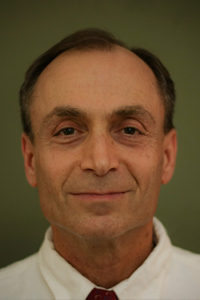
Lawrence Kelmenson, MD October 21, 2018
 

Psychiatry and Pain Management’s soaring profits since 1990 were fed by a unique combination of favorable circumstances never before seen: First, they’re paid mostly by federal funds. These include Medicaid, Medicare, and tax subsidies for employer-paid healthcare. But unlike other federally subsidized industries, health industry goods and services are covered by insurance, so high costs don’t deter client use of them. Just imagine all the fine food and posh restaurants we would access if we had hunger insurance that paid for them.

Mental health and pain treaters have advantages over other industries that rely on insurance payments: Medicare and Medicaid, being federally funded, are able to spend endless public money with few restrictions on coverage, regardless of cost. For example, Medicare costs jumped after a 2008 law raised mental health reimbursement from 50% to 80%.1 Private health insurers tried to rein in rising mental health costs, but were blocked by 1996,2 2008, and 20103 parity laws that forbade mental healthcare limits, copays, deductibles, or certification requirements from being greater than for physical care. This is part of why private insurance is now so costly.

To tap into this endless money, the pain and ‘mental illness’ fields made use of another advantage: Unlike events covered by other types of insurance, an illness is an arbitrary concept. Doctors can thus broaden its definition in order to broaden their domain: It can be a subjective physical perception with no clear or treatable source. For example, chronic pain became an illness. Illnesses do not even need to be physical: Painful thoughts and feelings, and kids acting like kids, also became illnesses. This was endorsed by a 1992 law4 that granted funds for services for the ‘one quarter who will suffer from mental disorders’, and for biomedically-focused mental illness research to be done at the NIH.

So, unlike other insurers that can verify house fires, car wrecks, or death, health insurers can’t verify mental illness or pain. Unlike other MDs, psychiatrists and pain doctors can invent infinite chronic (and thus lucrative) illnesses. Each client can be labeled with many different ones; there’s no limit. And each illness can justify a doctor’s luring the patient into lifelong addiction to euphoria-giving pills.

These MDs can also pad profits by putting clients on disability: Clients will then return regularly/eternally to prove ongoing disability, to ensure that their SSD checks and food/housing/healthcare assistance continue. Since they won’t work, they’ll have the time (and health insurance) to do so. A 1984 law5 made adult disability approval hinge on subjective functional impairment instead of objective disease evidence; this made mental illness (or chronic pain) easier to get SSD for. In 1991,6 the Social Security administration made child disability also hinge on functionality instead of illness proof. Child SSI cases rose five-fold soon after, mostly for mental illness.7 So illness-creators opened doors to disability benefits as well as insurance cash; that’s convenient, since their addictive ‘meds’ make it hard to work.

Two 1990 laws8 9 specified depression, ADHD, etc.to be valid causes of disability (before then, schizophrenia was the only ‘mental illness’ considered disabling). This further eased access to SSD/SSI funds. These laws also rewarded these illnesses by making life-easing accommodations available to those who ‘have’ them. For example, Billy prefers to play video games rather than do homework. By getting him labeled ADHD, his busy parents and teachers won’t have to struggle to teach him good work habits, since he’ll now be given less schoolwork (he’ll also be drugged into submission, so he won’t need to be raised). And his label may qualify his family for SSI, Medicaid, and other benefits.

400 million addictive prescriptions are filled yearly.10 It’s caused so much addiction and overdosing, including among kids who steal their parents’ pills, that the lifespans of white Americans have dropped steadily (they use 2.5 times as many psych11 and opioid12 ‘meds’ as non-whites). Then a 2000 law13 authorized doctors to treat the addictions they caused with yet more opioids (suboxone, or prison heroin). It’s such blatant drug-dealing that this law had to be enacted to make it legal (it circumvented a 1914 law14 that criminalized the prescribing of opiates to maintain addicts’ addictions). Suboxone is often peddled at drug rehabs, where clients thus score rather than quit drugs. Since the 2008 parity law made insurers cover treatment for addiction the same as for physical illness, these rehabs make a killing.

Mental health treaters capitalized on all these favors to become our most costly healthcare sector15 and a major cause of healthcare becoming our government’s top expense and top tax subsidy. Costs of other government programs also spiked, due to mental health, pain, and addiction treaters baiting and trapping millions into reliance on Social Security and other benefits. Since 2016, Congress has had to divert funds from the SS retirement to the SS disability trust fund,16 since the latter couldn’t keep up with all its mental illness and chronic pain claimants (its main recipients17). Businesses cut full-time workers in order to avoid paying their costly healthcare as is required by law. This drove yet more people to seek federal benefits. Nearly a fourth of Americans are on Medicaid now.

Psych drug and opioid prescribers are bankrupting us and exploding our debt. We spend more on healthcare and its addictive pills than all other nations, yet are still pounded by propaganda about “millions suffering needlessly from untreated mental illness.” Things will only get worse; many more mental health laws are on the way. 18 19 20 21 22 23 24 25 26
Deja Vu

Something similar actually did occur before: The British East India Company, aided by England’s parliament which invested in it, bailed it out, and made laws giving it monopolies, dominated trade in the East in the 1700s. It helped spread British colonialism there. In the 1800s, it profited greatly by growing opium in India and selling it in China. This hurt China’s economy by siphoning its silver and turning industrious Chinese people into idle, unproductive addicts. Its emperor finally halted opium imports after his son (China’s prince) died of an overdose (as did our “Prince”). The BEIC reacted by conquering, with British assistance, all Chinese ports and nearby areas, in order to ensure continued opium selling. This began what China calls its “century of humiliation” in which a great empire was brought to its knees and subjugated by England, France, and Japan.27

Are we at the start of our own lost century, with psych pill and opioid dispensers taking on the BEIC’s role? Like our drug-dealing doctors, it succeeded largely due to close alliance and support from its government every step of the way. The only difference is: Our own healers and leaders are killing us!


Show 27 footnotes

Previous articleMr. Rogers, Trauma-Informed Care, and the Limits of Information
Next articleNew Report Points to Gaps in the Evidence for Pediatric Bipolar Disorder
Lawrence Kelmenson, MD


Lawrence Kelmenson has practiced psychiatry for 32 years, working with children, adults, and families. He graduated medical school from State University of New York, and completed psychiatric residency training at Cornell. He then became staff psychiatrist, and later medical director, of Craig House Hospital in Beacon, New York until 2000, and has since conducted a psychotherapy-based private practice in Cold Spring, New York. 


Thank You Dr Kelmenson and MIA.

Monday, April 30, 2018

Report: Obamacare Made Insurance Companies Stock Prices Soar '272' Percent

dailycaller
Robert Donachie Capitol Hill and Health Care Reporter
12:01 PM 03/21/2018


Obamacare’s Medicaid expansion program and subsidies have made major health insurance companies extremely profitable, according to a White House economic report released Wednesday morning.

The White House Council of Economic Advisors (CEA) report that insurers’ financial health, a measure the group says is reflected in their stock prices, improved markedly after Obamacare took full effect Jan. 1, 2014. The economists find insurers’ stock prices soared 272 percent from January 2014 to 2018, outperforming the S&P 500 by 106 percent over the period.

Insurers took time to adjust to Obamacare rules and regulations. While the legislation passed in 2010, it faced a number of legal and congressional challenges that delayed its full implementation for four years. During that timeframe, insurance providers found it troubling to peg a price point for coverage plans after Obamacare expanded essential health benefits (ESBs) and required providers to follow other stabilization regulations, like Obamacare’s risk corridor program.

Some providers were not able to withstand the new regulations and withdrew from the market. Others weathered the changes, gobbled up smaller health insurers and consolidated to stay competitive. Consolidation wasn’t relegated to insurance providers. Hospital systems, pharmacy benefit managers and physician groups had to consolidate to survive the new Obamacare marketplace.

Insurers that stayed and participated in the exchanges have now found it a profitable enterprise, the report states.

“After narrowing in the initial years of ACA implementation, the gap between individual market premiums and claims payments was much higher in 2017 than pre-ACA,” the White House economists report. “As of 2017, most Blue Cross Blue Shield regional insurers, the main insurers left in the ACA-compliant individual and small group markets, have better profit margins than during the initial years of offering plans in marketplaces and have returned to pre-ACA profitability.”

Wednesday’s findings come in stark contrast to what major insurance providers on the state Obamacare exchanges have said for years. Every year since Obamacare’s full implementation–most recently during the numerous 2017 GOP repeal and replace attempts–major insurance companies, like Blue Cross Blue Shield, Aetna and UnitedHealth, have threatened to drop out, or dropped out, of state exchanges because they fear it will no longer be possible to make a profit.

When they dropped out or threatened to do so, insurance companies main concern was whether or not the federal government would continue to pay out Obamacare subsidies, known as cost-sharing reductions (CSRs).

CSRs remained a critical point of debate for House and Senate lawmakers heading into Wednesday’s expected unveiling of a must-pass spending bill to keep the government funded through Sept. 30. The subsidies are not expected to be in the final version of the spending bill, but Democrats, along with a handful of GOP lawmakers, consider them vital stabilizing the Obamacare marketplace.

The White House report may not help their case in securing CSR funding.

“Insurers remaining in the individual and small group markets seem to have recently accounted for ACA regulations and an older, more costly risk pool than they expected by charging higher premiums that have largely been covered by federal government premium subsidies,” the economists wrote. “Large insurers, many of whom left the individual market, are profiting from the Medicaid expansion, which is largely provided through private managed care and paid for by the federal government.”

The White House says it expects insurance company profits to continue to grow following the GOP tax law.

Insurance companies will submit their 2019 filings for the Obamacare marketplaces in the next few weeks.

Follow Robert Donachie on Twitter and Facebook


Thank You Mr Donachie and the DC.

Wednesday, April 4, 2018

California Commits Massive Medicaid Fraud

American Spectator
David Catron
April 2, 2018, 12:05 am

California is indeed the Golden State where Medicaid is concerned. The HHS Office of Inspector General (OIG) has found that, by exploiting Obamacare’s expansion of the program, California has enrolled hundreds of thousands of ineligible adults in Medicaid. Consequently, the state has bilked the federal government out of more than $1 billion in funding to which the state was not entitled. Indeed, these figures probably understate the amount of money that California officials have fraudulently extracted from the taxpayers. The OIG sampled a mere six-month period, from October 1, 2014 through March 31, 2015, to arrive at its damning assessment.

If the word “fraud” seems over the top, consider what happens to doctors who filch Medicaid funds to which they aren’t entitled. This case, reported by the Boston Globe, is typical: “A Brookline doctor has been sentenced to 11 months in jail and ordered to pay $9.3 million for running a Medicaid fraud scheme.” Likewise, Michigan CBS affiliate WNEM reports that a Saginaw doctor “was charged with three felony counts of Medicaid fraud.… Each charge is punishable by up to four years in prison and a $50,000 fine.” Such cases are prosecuted every day and the charge pursued by the authorities is “fraud.” So, isn’t the skullduggery described below also fraud?


On the basis of our sample results, we estimated that the State agency made Medicaid payments of $628,838,417 (Federal share) on behalf of 366,078 ineligible beneficiaries and $402,358,529 (Federal share) on behalf of 79,055 potentially ineligible beneficiaries.


Don’t be confused by the vague bureaucratic vernacular used in the above passage. When the OIG says, “the State agency made Medicaid payments (Federal Share),” it means all of the money used to cover these ineligible enrollees was provided by the federal government. For the period of time covered by the OIG audit, the federal Share of the costs for newly eligible, adult enrollees is 100 percent (which isn’t true in the case of low-income beneficiaries for whom the program was originally created). In other words, every dime California ostensibly “paid” for the people described above came straight out of your federal tax bill. As the OIG explains:


Thank You Mr Catron and American Spectator

Monday, February 26, 2018

USDA: 35,891 Retailers Engaged In Food Stamp Fraud

"Why, We need a Govt. Program! That'll fix Everything!"

cnsnews
Terence P. Jeffrey | February 26, 2018 | 5:35 PM EST

(CNSNews.com) - The U.S. Department of Agriculture has published a report estimating that 35,891 food retailers around the country engaged in food stamp fraud, illegally “trafficking” more than $1 billion in Supplemental Nutrition Assistance Program benefits annually over the three-year period from 2012 through 2014.

“Retailer trafficking of Supplemental Nutrition Assistance Program (SNAP) benefits occurs primarily when SNAP recipients sell their benefits for cash to food retailers, often at a discount,” the USDA’s Food and Nutrition Service said in a summary of the report.

“SNAP benefits are permitted for the purchase of eligible food items from authorized food retailers,” said the report. “The sale or exchange of SNAP benefits for anything other than food sold by an authorized SNAP retailer is illegal.”

The report, published in September 2017, looked at food stamp trafficking in 2012, 2013 and 2014, estimating that more than $1 billion in SNAP benefits were “trafficked” annually during that time period and that about 11.8 percent of the 303,522 retail stores authorized to accept SNAP benefits over the period were involved in trafficking.

“An estimated $1.077 billion in SNAP benefits annually were trafficked and thereby diverted from their intended purpose,” said the report.

“Overall, about 1.5 percent of total SNAP benefits were trafficked; and approximately 11.8 percent of all authorized SNAP stores engaged in trafficking,” it said.

Some types of stores were more likely to engage in food stamp trafficking than other types, according to the report.

This chart enumerating, by type, the stores estimated to have engaged in food-stamp trafficking appears on page 9 of the USDA report:


Publicly owned stories did not traffic in food stamp benefits, the report said.

“As there were no publicly owned stores found to have trafficked, privately owned stories account for 100 percent of all benefit dollars trafficked although they account for only 54.6 percent of all SNAP redemptions,” it said.

Larger stores were less likely to traffic in food stamps than smaller stores and “convenience stores” were the most likely of all to engage in trafficking.

Of the 35,891 food retailers the report estimated engaged in food stamp trafficking, only 30 were categorized as “supermarkets” and only 42 were “large groceries.”

By contrast, 1,700 were medium-sized groceries; 4,850 were small groceries, and 25,954 were “convenience stores.”

While only 0.07 percent of supermarkets engaged in food stamp trafficking, according to the report, 23.32 percent of small groceries did and 19.42 percent of convenience stores.

“Trafficking was most likely to occur in the most urban areas,” the report said.

“The store violation rate rises in accordance with the level of urbanization,” it said. “The most rural areas have the lowest story violation rate of just above 5 percent and the most urban areas have the highest store violation rate of 14.4 percent.”

“Trafficking is defined as buying or selling benefits for cash or consideration other than eligible food, and the penalty is permanent disqualification,” said the report. “Permanent disqualification occurs when a retailer’s authorization to redeem SNAP benefits is revoked.”

A USDA summary of activity in the SNAP program in fiscal 2016 indicated that there were 1,845 retailers permanently disqualified from the program that year.

A breakdown by states showed that the largest number of retailers permanently disqualified from SNAP in fiscal 2016 were in New York (448), the second largest number was in Florida (175), the third largest was in California (133) and the fourth largest was in New Jersey (130).


Please support CNSNews today! (a 501c3 non-profit production of the Media Research Center)


Thank You Mr Jeffrey and CNS

Monday, February 12, 2018

Fact Check: Does The Federal Government Borrow $1 Million Per Minute?

BTW: If you got here through google looking for Psychiatric Drug coverage just click our tag Risperdal.

dailycaller
Kush Desai Fact Check Reporter
10:31 PM 02/11/2018

Republican Sen. Rand Paul claimed Thursday that the federal government borrows $1 million every minute.

Verdict: True


The annual federal deficit has averaged more than $1 million per minute since fiscal year 2016 and is projected to reach around $2 million per minute in FY 2019.

Fact Check:

Congress passed a two-year budget deal early Friday morning. Although lawmakers still have to appropriate specific spending by late-March, the deal addressed spending priorities of both parties by hiking defense and domestic spending caps in addition to allocating $90 billion in disaster relief funding. The deal received bipartisan support in both houses of Congress, and President Donald Trump signed it later that morning.

The budget deal is projected to add $320 billion to the federal deficit over the next decade. Paul, a fiscal hawk, opposed the deal and demanded an amendment to cut federal spending.

Delaying the Senate’s vote on the budget bill with a series of roadblocks and floor speeches that ultimately resulted in a brief government shutdown, Paul underscored how U.S. deficit spending is too immense to ignore.

“I don’t advocate for shutting the government down, but neither do I advocate for keeping it open and borrowing $1 million a minute. In fact, the statistics this year are closer to $2 million a minute,” Paul claimed. “This is a government that is horribly broken.”


Paul made the claim multiple times on Thursday, and again on Friday.

Data from the Federal Reserve Bank of St. Louis (FRED) indicate that the federal government’s spending exceeded its revenue by $585 billion in FY 2016. While the Treasury Department does not actually borrow money on a minute-by-minute basis, the deficit averaged out to $1.1 million of new debt every minute.

FRED data show that the deficit increased in FY 2017 to $666 billion, averaging $1.3 million per minute.

With the passage of the budget deal, the Committee for a Responsible Federal Budget (CRFB), an independent think tank that advocates for deficit reduction, now projects that the deficit will grow to $800 billion in FY 2018. This averages out to $1.5 million per minute, consistent with Paul’s claim that current borrowing is “closer to $2 million” per minute.

Paul’s office told The Daily Caller News Foundation that Paul was using his office’s estimation that Congress will actually end up spending even more than what was agreed to in the budget deal and, as a result, run a deficit of $1 trillion in 2018 – which averages out to $1.9 million per minute.

CRFB estimates that deficits will balloon to $1.2 trillion in FY 2019, or $2.3 million per minute. This is about $400,000 a minute higher than before the budget deal was passed.

Congress’s budget deal marks a stark departure from the fiscal discipline it had legislated in the Budget Control Act of 2011, which instituted federal spending caps and automatic sequestration if Congress could not agree on spending cuts. Sequestration, in addition to broader economic recovery from the Great Recession, helped reduce annual budget deficits by more than two-thirds from a peak of $1.4 trillion in FY 2009 to $438 billion in FY 2015.

The deficit started increasing again for the first time in years in 2016 as entitlement spending grew and tax revenues were lower than expected. The fiscal outlook then worsened when the GOP – with Paul’s vote – passed a major tax cut in December that is estimated to add at least $1.5 trillion to the national debt over the next decade.

By FY 2027, CRFB estimates that the deficit could balloon to $2.1 trillion, or $4 million per minute.

Follow Kush on Twitter


Thank You Mr Desai and the DC.

Sunday, December 10, 2017

Pentagon To Undergo First Audit Ever After Decades of Sloppy Accounting And Missing Trillions

by Tyler Durden
Dec 10, 2017 9:08 AM

After decades of waste, overpayments, trillions of missing or improperly accounted for dollars, and most recently losing track of 44,000 US soldiers, the Pentagon is about to undergo its first audit in history conducted by 2,400 auditors from independent public accounting firms to conduct reviews across the Army, Navy, Air Force and more - followed by annual audits going forward.


Secretary of Defense Jim Mattis speaks with DoD Comptroller David L. Norquist, June 15, 2017

The announcement follows a May commitment by Pentagon comptroller David Norquist, who previously served as the CFO at the Department of Homeland Security when the agency performed its audit. "Starting an audit is a matter of driving change inside a bureaucracy that may resist it," Norquist told members of the Armed Services Committee at the time when pressed over whether or not he could get the job done at the DHS.

According to the DoD release:

The audit is massive. It will examine every aspect of the department from personnel to real property to weapons to supplies to bases. Some 2,400 auditors will fan out across the department to conduct it, Pentagon officials said.

"It is important that the Congress and the American people have confidence in DoD's management of every taxpayer dollar," Norquist said. -defense.gov

The Pentagon is no stranger to criticism over serious waste and purposefully sloppy accounting. A DoD Inspector General's report from 2016 - which appears to be unavailable on the DoD website (but fortunately WAS archived)- found that in 2015 alone a staggering $6.5 trillion in funds was unaccounted for out of the Army's budget, with $2.8 trillion in "wrongful adjustments" occurring in just one quarter.

In 2015, the Pentagon denied trying to shelve a study detailing $125 billion in waste created by a bloated employee counts for noncombat related work such as human resources, finance, health care management and property management. The report concluded that $125 billion could be saved by making those operations more efficient.

On September 10th, 2001, Secretary of Defense Donald Rumsfeld announced that "According to some estimates we cannot track $2.3 trillion in transactions," after a Pentagon whistleblower set off a probe. A day later, the September 11th attacks happened and the accounting scandal was quickly forgotten. And twenty years before that, DoD analyst Franklin C. Spinney exposed what he called "accounting games," saying "Those numbers are pie in the sky. The books are cooked routinely year after year." In a 2002 testimony before the House Committee on Government Reform, Spinney laid out the DoD's accounting quagmire of un-auditable books and budget projections which don't match reality. 


Franklin Spinney, 2002

Finally, those of us old enough to remember the 80's, let's not forget the bombshell report on overpayments the Pentagon made for simple items, such as $37 screws, $7,622 coffee makers, and $640 toilet seats which Sen. William Roth Jr (R-DE) was able to whittle down to $200.

The announcement of the audit comes amid a looming government shutdown battle which was given a two-week extension last week until December 22. If this occurs, military personnel would report to work as usual, but the DoD would not pay them until the shutdown ends.

"I cannot emphasize too much how destructive a shutdown is," Norquist said. "We've talked before about the importance of maintenance on weapons systems and others, but if it's not an excepted activity, there'll be work stoppage on many of those maintenance functions."

With both parties standing to lose more than gain from a shutdown, that is unlikely to happen. Meanwhile, with decades of lost confidence in the Pentagon's accounting practices, we eagerly await the results of this "massive" audit to see exactly how much dirt - and where - previous administrations have swept under the rug.


Thank You Mr Durden and Zerohedge.

Friday, December 8, 2017

Real Target of Republican Tax Bills: Feds, Eds, And Meds Bloat

townhall 
Michael Barone
Posted: Dec 08, 2017 12:01 AM

Are the current Republican tax bills, passed by the House and Senate and being reconciled in conference committee, an attack on "feds, eds and meds"? That's a reference to the government, health care and education jobs that local Democrats in Dayton, Ohio, told Sen. Sherrod Brown have been fueling the area's comeback.

The Dayton area's reliance on government is in tension with its history as an incubator of private-sector inventiveness, which more than a century ago produced the first cash register, the first airplane and the first automotive electronic ignition.

That's a melancholy reflection. But the implied complaints about the tax bills have more basis than the apocalyptic rhetoric coming from journalists (Kurt Eichenwald: "America died tonight") and Democratic politicians (Nancy Pelosi: "the end of the world").

The Republican tax bills would indeed reduce revenues to the "feds," with surprisingly small rate cuts for high earners and by cutting the corporate rate from 35 to 20 percent. The current rate, the highest in the world, has to be lowered sooner or later, as most liberal economists (and Barack Obama) have long admitted.

And it is hard to take seriously those moaning about increased budget deficits from those unwilling to reform entitlements, which includes all Democrats and many Republicans, notably Donald Trump.

The critics have more of an argument when it comes to "eds" and "meds." But there's a counterargument there, as well -- that the tax bills push against the counterproductive government policies that have been pushing up education and health care costs, to the detriment of the consumers thereof.

The tax bills would impose a new 1.4 percent tax on the investment income of endowments of very wealthy colleges and universities. They would eliminate deductions for student loans and tax tuition waivers for graduate students.

These institutions have been coasting on their reputation for excellence and as havens of free thought, even as they impose speech codes, conduct kangaroo courts on sexual assault charges and allow humanities and social science departments to be dominated by postmodern agitprop and gibberish.

Student loans impoverish many students, especially dropouts, while the money they pump into universities produces administrative bloat, to the point that there are more administrators than teachers in higher education today. Government subsidies produce an oversupply of people with doctorates, causing their theses to go unread and their job prospects to be dismal.

Polls show that many voters have become aware of the intolerance and unaccountability of these institutions and that the economic rewards of a degree are diminishing. The tax bills send a signal to the people running higher education that they'd better change their ways.

On health care, the Republicans have sent a similar signal by repealing the Obamacare mandate to buy insurance. It turns out that this "tax" -- as Chief Justice John Roberts insisted it is -- falls most heavily on those with modest incomes, leading many of them to conclude that Obamacare policies are a bad deal.


Or consider the yelps about the Republicans' planned repeal of the deductibility of state and local taxes (except for some property taxes). This would be progressive in its incidence because most of the increased federal revenue would come from high earners in high-tax states, especially New York, New Jersey, Connecticut and California, whose residents tend to vote Democratic.

Americans in lower-tax states have been effectively subsidizing bloated public payrolls and astonishingly generous pension plans. Removing the deduction would put pressure on politicians in high-tax states and on the public employee unions to hold taxes and spending down.

This change, plus a possible Supreme Court ruling that public employees cannot be forced to pay union dues, should reduce the largesse that public employee unions have been contributing to Democratic candidates in these states and nationally. Seeing as public employee union dues come from taxpayers, this amounts to public financing of the campaigns of one political party. It shouldn't be surprising that the other party wants to stop it.

An Agriculture Department report on the expenses of raising a child showed that over the past several decades, the costs of health care and education -- despite or because of government subsidies and regulation -- had increased much faster than inflation. The costs of food and clothing, mostly provided by the private sector, have actually decreased in real dollars.

The Republican tax plans can be seen as a pushback against "feds, eds and meds" inflation and a push toward something more like what private-sector innovators (like those in long-ago Dayton) have been able to deliver.


Thank You Mr Barone and Townhall.

Wednesday, September 13, 2017

ICE:14,000 Detained Illegal Aliens Getting FREE Healthcare At 21 Facilities In 10 States


CNSNews

By Susan Jones | September 13, 2017 | 11:18 AM EDT


(CNSNews.com) - Sen. Bernie Sanders (I-Vt.) tweeted that he's "very proud" to be introducing his "Medicare for All Act" on Wednesday.

And while liberal Democrats urge taxpayer-funded health care for all Americans, at least 14,000 non-Americans already have it -- right here in the USA.

"The ICE Health Service Corps administers direct care to 14,000 detained illegal aliens in 21 facilities across 10 states," the Immigration and Customs Enforcement agency tweeted on Tuesday.

A second tweet said the ICE Health Service Corps is focused on the best patient outcomes, and this tweet linked to an ICE-generated article posted on the agency's website.

The article begins:


Manuel felt sudden intense chest pain and had difficulty breathing.

He knew something was terribly wrong and called out for his deportation officer. His current place of residence: a U.S. Immigration and Customs Enforcement (ICE) detention facility in Jena, Louisiana.

The deportation officer immediately announced a facility medical emergency and notified 911 while another staff member rushed over and began life-saving chest compressions on Manuel. The rest of the medical response team arrived within two minutes and observed Manuel was not breathing and pulseless. They assisted with providing emergency care, revived his vital signs and stabilized him until the ambulance arrived and transported him to the nearest hospital for additional care.

A typical day for the ICE Health Service Corps (IHSC).

ICE says its health corps consists of physicians, nurse practitioners, registered nurses, psychiatrists, psychologists, social workers, pharmacists, dentists and administrators. The 1,100-plus personnel include U.S. Public Health Service Commissioned Corps officers, federal civil servants and contract health professionals.

These medical professionals undergo "a significant amount of training to ensure excellent detainee care," the article notes.

The article posted by ICE apparently comes in response to accusations by Human Rights Watch and others who have complained about substandard care at ICE detention facilities.

This past May, for example, Human Rights Watch produced a report examining "serious lapses in health care that have led to severe suffering and at times the preventable or premature death of individuals held in immigration detention facilities in the United States."

According to ICE, every detainee gets a full health assessment within two weeks of entering a detention center, and for some of them, it's the first time they've ever had a medical check-up.
"Detainees identified as high-risk during the intake process are moved to a higher level of care immediately," the article said. "If at any time a patient verbalizes an issue such as, 'I feel very bad' or 'I don’t have the medicine I need,' a nurse or mid-level practitioner has the authority to interact with a higher level medical provider to determine when the patient can be seen by a physician within 24 hours."

A "medical delivery care person" staffs each facility 24/7 "for direct patient access."

Dr. Luzviminda Peredo-Berger, chief medical officer of the ICE Health Service Corps, noted that for most people, seeing a private-practice doctor within 24 hours can be difficult, but the sick-call system at ICE detention centers means detainees are able to get quick attention when they need it.

"I’ve received thank you notes from patients who have said the health care they received from ICE has far exceeded anything they expected,” Peredo-Berger is quoted as saying.

The full article can be found here.

The provision of medical care to immigration detainees, many of them awaiting deportation or resolution of their legal cases, is authorized by federal law.


Thank You Ms Jones and CNS.

Kind'a gives you a warm feeling in the pit of your, . . . WALLET, . . as you're being crushed, bled out and sucked dry paying for Emperor Barry's ACA, . . . doesn't it?


Debt Ridden California To Set Aside $30M (Public Funds) For DACA Legal Defense

dailycaller
WILL RACKE
Immigration and Foreign Policy Reporter
12:57 PM 09/13/2017

California officials are considering to set aside public funds for the legal defense of illegal immigrants who have received protection from deportation under a now-canceled executive amnesty program.

Democratic Gov. Jerry Brown and top state lawmakers announced Tuesday they want to use $30 million to aid beneficiaries of the Deferred Action for Childhood Arrivals (DACA) program, which President Donald Trump decided to end last week.

The plan, which is set to be taken up by a legislative committee on Wednesday, would set aside $20 million for legal services for DACA recipients and give $10 million to public colleges as financial aid to DACA students, the San Francisco Chronicle reported.

“We will not let one man with xenophobic tendencies undercut years of progress we have made in California to integrate these young adults into our society and economy,” California Senate President Pro Tem Kevin de Leon said in a statement, referring to Trump’s decision to wind down the DACA program.


California has more DACA recipients than any other state by a wide margin. About 223,000 DACA recipients — more than a quarter of all program beneficiaries — live there, according to U.S. Citizenship and Immigration Services figures.

Home to an estimated 2.3 million illegal immigrants, California has been particularly strident in its opposition to the Trump administration’s immigration enforcement policies. Brown and De Leon on Tuesday reached an agreement on a sweeping sanctuary state bill that would sharply restrict cooperation between local law enforcement and federal immigration authorities. And on Monday, California Attorney General Xavier Becerra sued the Trump administration over ending DACA, asserting that the decision was a violation of the program recipients’ right to due process.

Brown and De Leon’s plan to allocate funds for DACA recipients comes as California struggles to control budget deficits and a massive long-term debt burden. Four years after crawling out of a deep fiscal hole, the state is once again facing a $1.6 billion budget shortfall by next summer. California also has nearly $400 billion in unfunded pension liabilities and bond debt, part of the total state and local debt burden of $1.3 trillion, according to the California Policy Center.

Despite budget constraints, the state’s Democratic lawmakers say additional funds are needed to protect California DACA recipients who have been put in legal limbo by Trump’s decision.

“The new funding for DACA services we are adding to the budget will provide answers and help young Californians stay in the only country they’ve ever known,” said state Assembly Speaker Anthony Rendon in a statement. “Donald Trump may love chaos. These kids don’t deserve it.”

Follow Will on Twitter

Send tips to will@dailycallernewsfoundation.org.

Content created by The Daily Caller News Foundation is available without charge to any eligible news publisher that can provide a large audience. For licensing opportunities of our original content, please contact licensing@dailycallernewsfoundation.org.

Tags: California, DACA, Jerry Brown


Thank You Mr Racke and DC.

Wednesday, May 24, 2017

Putting A Lid On Waste: Needless Medical Tests Not Only Cost $200 Billion -They Can Do Harm


It’s common knowledge in medicine: Doctors routinely order tests on hospital patients that are unnecessary and wasteful. Sutter Health, a giant hospital chain in Northern California, thought it had found a simple solution.

The Sacramento-based health system deleted the button physicians used to order daily blood tests. “We took it out and couldn’t wait to see the data,” said Ann Marie Giusto, a Sutter Health executive.

Alas, the number of orders hardly changed. That’s because the hospital’s medical-records software “has this cool ability to let you save your favorites,” Giusto said at a recent presentation to other hospital executives and physicians. “It had become a habit.”

There are plenty of opportunities to trim waste in America’s $3.4 trillion health care system — but, as the Sutter example illustrates, it’s often not as simple as it seems.

Some experts estimate that at least $200 billion is wasted annually on excessive testing and treatment. This overly aggressive care also can harm patients, generating mistakes and injuries believed to cause 30,000 deaths each year.

“The changes that need to be made don’t appear unrealistic, yet they seem to take an awful lot of time,” said Dr. Jeff Rideout, chief executive of the Integrated Healthcare Association, an Oakland, Calif., nonprofit group that promotes quality improvement. “We’ve been patient for too long.”

In California, that sense of frustration has led three of the state’s biggest health care purchasers to band together to promote care that’s safer and more cost-effective. The California Public Employees’ Retirement System (CalPERS), the Covered California insurance exchange and the state’s Medicaid program, known as Medi-Cal — which collectively serve more than 15 million patients — are leading the initiative.

Progress may be slow, but there have been some encouraging signs. In San Diego, for instance, the Sharp Rees-Stealy Medical Group said it cut unnecessary lab tests by more than 10 percent by educating both doctors and patients about overuse.

A large public hospital, Los Angeles County-University of Southern California Medical Center, eliminated preoperative testing deemed superfluous before routine cataract surgery. As a result, patients on average received the surgery six months sooner.

These efforts were sparked by the Choosing Wisely campaign, a national effort launched in 2012 by the American Board of Internal Medicine (ABIM) Foundation. The group asked medical societies to identify at least five common tests or procedures that often provide little benefit.

The campaign, also backed by Consumer Reports, encourages medical providers to hand out wallet-sized cards to patients with questions they should ask to determine whether they truly need a procedure.

Critics have knocked Choosing Wisely for playing it too safe and not going after some of the more lucrative procedures, such as certain spine operations and arthroscopic knee surgeries.

Daniel Wolfson, chief operating officer at the ABIM Foundation, said the Choosing Wisely campaign has been successful at starting a national conversation about unwarranted care. “I think we need massive change and that takes 15 years,” Wolfson said.

The state effort, dubbed Smart Care California, is in the early stages as well.

Initially, the group has focused on cutting the number of elective cesarean sections, reducing opioid use and avoiding overtreatment for patients suffering low-back pain. In its contract with health insurers, the Covered California exchange requires that their in-network providers meet a range of quality standards, including low C-section rates.

Dr. Richard Sun, co-chairman of the Smart Care group and a medical consultant at CalPERS, said he’s pursuing safer, more affordable treatments for low-back pain, a condition that cost the state agency $107 million in 2015. “One challenge is developing metrics that everyone can agree upon to measure improvement,” he said.

For patients, overtreatment can be more than a minor annoyance. Galen Gunther, a 59-year-old from Oakland, said that during treatment for colorectal cancer a decade ago he was subjected needlessly to repeated blood draws, often because the doctors couldn’t get their hands on earlier results. Later, he said, he was overexposed to radiation, leaving him permanently scarred.

“Every doctor I saw wanted to run the same tests, over and over again,” Gunther said. “Nobody wanted to take responsibility for that.”

At Cedars-Sinai Medical Center in Los Angeles, officials said that economic incentives still drive hospitals to think that more is better.

“We have excellent patient outcomes, but it’s at a very high cost,” said Dr. Harry Sax, executive vice chairman for surgery at Cedars-Sinai. “There is still a continued financial incentive to do that test, do that procedure and do something more.”

In addition to financial motives, Sax said, many physicians still practice defensive medicine out of fear of malpractice litigation. Also, some patients and their families expect antibiotics to be prescribed for a sore throat or a CT scan for a bump on the head.

To cut down on needless care, Cedars-Sinai arranged for doctors to be alerted electronically when they ordered tests or drugs that run contrary to 18 Choosing Wisely recommendations.

The hospital analyzed alerts from 26,424 patient encounters from 2013 to 2016. All of the guidelines were followed in 6 percent of those cases, or 1,591 encounters.

Sax said Cedars-Sinai studied the rate of complications, readmissions, length of stay and direct cost of care among the patients in whose cases the guidelines were followed and compared those outcomes with cases where adherence was less than 50 percent.

In the group that didn’t follow the guidelines, patients had a 14 percent higher incidence of readmission and 29 percent higher risk of complications. Those complications and longer stays increased the cost of care by 7 percent, according to the hospital.

In 2013, the first year of implementation of Choosing Wisely guidelines, Cedars-Sinai said it avoided $6 million in medical spending.

For perspective, Cedars-Sinai is one the largest hospitals in the nation with $3.3 billion in revenue for the fiscal year ending June 30. It reported net income of $301 million.

In Northern California, Sutter has incorporated more than 130 Choosing Wisely recommendations as part of a broader effort to reduce variation in care. In all, Sutter said, it has saved about $66 million since 2011.

That’s a significant sum. However, during the same period, Sutter reported $2.7 billion in profits. Last year alone, it posted an operating profit of $554 million on revenue of nearly $12 billion.

Giusto said her team of employees tasked with changing physician behavior and eliminating these variations is separate from administrators who are focused on maximizing reimbursement. She said there can be conflicting forces within a hospital.

“We get real excited about a project with [emergency department] doctors on reducing CT scans for abdominal pain,” said Giusto, director of Sutter’s office of patient experience. “Then I can hear the administration say that was a fee-for-service patient. I just lost money, right?”

Giusto meets with doctors to present data on how many tests or prescriptions they order and how that compares to others. At one clinic, she shared slides showing that some doctors were ordering more than 70 opioid pills at a time while others prescribed fewer than 20. In response, Sutter set a goal of 28 tablets in hopes of reducing opioid abuse.

“Most of the physicians changed,” Giusto said. “But there were still two who said, ‘Screw it. I’m going to keep doing it.’”

This story was produced by Kaiser Health News, which publishes California Healthline, an editorially independent service of the California Health Care Foundation.

Categories: Cost and Quality, Health Industry

Tags: Electronic Health Records, Hospitals


Thank You Mr Terhune and KHN.

Monday, April 3, 2017

Massachusetts: Behavioral Health: $193 Million Up In Smoke

Another $193 Million up in smoke.

Funny how Behavioral Health can identify, condemn and track thoughts, moods and behaviors as incurable diseases but they can't get a handle on $193 Million Dollars which is something any kid with a cell phone can photograph.

Audit Reveals $193 Million In Improper MassHealth Behavioral Health Payments 

And the comment of the day goes to KTM 500

"Imagine what kind of article this would have been if Susan (State Auditor) Bump wasn't a Democrat?"

The comments will tell you far more of what you need to know than the official Democrat State Auditor will. 

State Audit Finds $193 Million In Improper Payments From MassHealth


Here we go. Someone who doesn't appear to have any wild hairs about reblogging Their investigation.

The Somerville News Weekly

April 3rd, 2017

Audit Finds Almost $193 Million In Improper or Questionable  Behavioral Health Payments By MassHealth.

Deficiencies Similar to Previous MassHealth Audit Findings

[Ed; Color us Shocked! No, actually, not in the slightest.]

BOSTON, MA — State Auditor Suzanne M. Bump today issued an audit of the behavioral health program at MassHealth, which found that MassHealth paid doctors directly for providing mental health services that should have been paid for by the Massachusetts Behavior Health Partnership (MBHP). MBHP is paid by MassHealth to manage the coordination of care for mental health services for MassHealth members. MassHealth’s payments over a five year period to doctors for services that should have been paid for by MBHP resulted in improper payments of approximately $93 million, and another $100 million in questionable payments for services that should have been included in MBHP’s contract. In the audit, Bump calls on MassHealth to immediately improve its processes to prevent any further improper payments, and determine whether it can recoup any monies paid.
“This audit is the latest example of poor claims administration at MassHealth,” Bump said. “Some of the problems identified stem from MassHealth and its contractors’ different understandings of who is to pay what; other times MassHealth simply acts contrary to its own rules and standards.”


MassHealth has a contract with MBHP to provide behavioral-health care and substance-abuse care for certain MassHealth members at a fixed monthly fee. During the audit period, July 1, 2010 through June 30, 2015, MassHealth paid MBHP approximately $2.6 billion. The contract specifies the types of services and procedures that MBHP must provide to members; however, the audit found that while MassHealth made these monthly payments to MBHP to cover the specified services, it also directly paid doctors approximately $93 million for the same services.

Additionally, the audit found that MassHealth made approximately $100 million in questionable payments for items such as family therapy sessions, behavioral-health counseling, and psychological testing, which are clearly behavioral health in nature, but were not specifically included in the list of services covered by MassHealth’s contract with MBHP. The audit cites MassHealth regulations that require that all behavioral health services be paid for by MBHP.

Finally, the audit also found that MassHealth paid claims for behavioral health services provided in emergency rooms, rather than referring these claims to MBHP for payment, as required by MassHealth regulations. The audit notes that this practice creates a financial incentive for MBHP to allow its members to seek behavioral-health care in emergency rooms.

In its response, MassHealth said, among other things, that the Auditor wrongly included in her office’s analysis claims with medical treatment components, which made the agency, and not MBHP, the proper payer. However, Bump noted that those claims were not included in the analysis.

In 2015, an audit from Bump’s office found similar deficiencies in MassHealth’s administration of managed care organizations (MCO) and related contracts. Similar to MBHP, MassHealth pays these MCOs a fixed-fee to cover the costs of a range of medical services for certain MassHealth members. The 2015 audit found MassHealth unnecessarily paid approximately $233 million to doctors for services that should have been covered under these MCO contracts. In addition, it found that the agency could have additionally saved up to $288 million if its MCO contracts had been more specific as to which services were to be paid for by the contract. If all of that audits recommendations changes were made, they could save the program approximately $10 million annually.

“As leaders in our state seek solutions to address the growth of MassHealth costs, our audits have shown time and again that the program must improve its contracts to ensure that they cover all appropriate costs, and strengthen their claims process to ensure the program only pays for appropriate claims. This would yield significant costs savings and could prevent the need to raise fees or reduce benefits,” Bump said. “Our initial estimates suggest that the recommended changes identified in this audit alone could save the program up to $27 million annually. It’s my hope that today’s audit will assist policymakers in their efforts to control costs in this important program.”

In fiscal year 2016, MassHealth paid healthcare providers $14.8 billion for healthcare services for approximately 1.9 million low-and-moderate income individuals. MassHealth is the state’s largest program and accounts for approximately one-third of the state budget. 


Thank You Somerville News Weekly.


Deficiencies Similar to Previous MassHealth Audit Findings

What else would you expect coming from a playbook that ultimately leads back to This Anti Semitic, Hitler Worshipping Jerk? 

Carl Jung's Jackass Archetypes

Carl Jung's Mind

Wednesday, November 18, 2015

U.S.Postal Service Lost $5.1 Billion In 2015

Well of course they did. How else can they go to Congress asking for a Budget Increase? The program/Dept is sound Congressman Foghorn and your esteemed committee. It's simply underfunded.

CNSNews
By Barbara Hollingsworth | November 18, 2015 | 11:29 AM EST

(CNSNews.com) – Despite an increase in revenue of $1.1 billion, the U.S. Postal Service reported a net loss of $5.1 billion for Fiscal Year 2015, which ended on September 30th.
"The U.S. Postal Service reported a net loss of $5.1 billion for fiscal year 2015 (October 1, 2014 - September 30, 2015)," the Postal Service said in an news release.
It was the ninth year in a row that USPS ended its fiscal year in the red.
“We achieved controllable income in excess of $1 billion for the second consecutive fiscal year giving us some limited flexibility to make critical investments in the future of the organization,” Postmaster General Megan Brennan said in a statement. “To maintain this success, we will need to continue our efforts to grow the business and drive operational efficiencies.
“However, we will also need the enactment of legislation that makes our retiree health benefit (RHB) system affordable and that provides increased pricing and product flexibility.”
 
According to USPS’ latest financial report to the Postal Regulatory Commission, the postal system took in $68.9 billion in revenue, an increase of $1.1 billion over the $67.8 billion it received in FY2014.
However, “controllable expenses” also increased $1.3 billion, from $66.4 billion in FY2014 to $67.7 billion in FY2015. That included a 21 million increase in workhours, even though total mail volume declined from 155.5 billion pieces in 2014 to 154.2 billion pieces in 2015.
USPS explained that the increase in operating expenses “was the result of a combination of factors, including higher compensation costs attributable to increased benefits expenses and additional work hours partly associated with growth in the more labor-intensive shipping and packaging business,” which increased 14.1 percent during FY2015.
First-class mail decreased 2.2 percent in 2015 and standard mail volume was down 0.3 percent from last year, USPS reported. Periodical volume also decreased 7.3 percent.
“Adding to the financial pressures that the Postal Service will face in the short term is the fact that the exigent surcharge authorized by the Postal Regulatory Commission in 2014 will need to be rolled back in approximately April of 2016,” said USPS Chief Financial Officer Joseph Corbett.
“This surcharge has provided an additional estimated $3.5 billion in revenue since its inception, and will provide a total of $4.6 billion in additional revenue at the time when the commission will require us to eliminate the surcharge.” 
But with $361.1 billion in total assets compared to $462.4 billion in total liabilities, USPS’ long-term financial outlook is not good, the report admitted.
“Total liabilities, including retirement obligations, exceed assets by $101 billion. It would take RHB legislative change and decades of annual profits to remedy this level of excess liabilities and unfunded retirement obligations,” it stated.

Thank You Ms Hollingsworth and CNS.

But ObamaCare will save us money in the future, if we can just tough it out long enough to Live through it and Trust in the System.

Tuesday, October 28, 2014

Limited Reimbursement Makes Psychiatric Care A Losing Proposition

All Together Now! 

1, . . 2, . . Awww. Sympathy, sympathy, sympathy.

Understand WHAT Psychiatric Care actually Sells before you get all choked up about this. It's about the Benjamins.

Suicides Rise Dramatically With Increasing Psychiatric Care

fiercehealthcare;


Loss of psychiatric beds overloads EDs

For a snapshot of why so many psychiatric patients end up in the emergency department (ED)--and the problems that causes--take a look at Orange County, California.

The county lost 58 percent of its psychiatric beds between 1995 and 2012, the Orange County Register reported, leaving it with less than one-third the number of beds required for the county's population. Meanwhile, psychiatric patient volume in county emergency rooms (ERs) rose 47 percent between 2006 and 2011, the newspaper reported, even though total ED patient volume rose only 7 percent.

Hospital consolidation is partly to blame, the article said, but declining reimbursements for mental healthcare discourage hospitals from adding more psychiatric beds.

"The fear of individual hospitals is that if we build that capability (to handle more psych patients) and it becomes known in the community that we have fixed that problem, we are going to get every single psychotic emergency in the county, and the reimbursement system is not sustainable," Steve Moreau, CEO of St. Joseph Hospital in Orange, told the newspaper.

That factor, along with other pressures on the mental health system, leaves psychiatric patients spending hours or days in the ED waiting for a bed or for a mental health evaluation, the Register reported. But ERs aren't well-equipped to handle those patients.

Nearly 50 percent of the assaults against ER nurses came from psychiatric patients, California Healthline reported, citing a study by the Emergency Nurses Association.

In an effort to try to take some of the pressure off EDs, officials in neighborhing Los Angeles County opened a 22-bed mental health urgent care center in August. The center evaluates, counsels and treats patients, and will refer them to long-term treatment if necessary.

The problem isn't limited to California hospitals. In a survey by the American College of Emergency Physicians, 84 percent of respondents said their EDs "board" psychiatric patients.


For more information:
- read the Register article
- here's the California Healthline article
Related Articles:

Thank You Ms Bird and Fierce Healthcare.