Showing posts with label Atypical Antipsychotics. Show all posts

Thursday, January 3, 2019

The Monster In Our House, What Psychiatric Medication Did To Our Father

"Trust us. We're Professionals."

Mad In America
Roberta Connors January 3, 2019


My cell phone rings.

“Is this ‘Robik’?” someone asks.

“That’s my nickname,” I answer, confused. “Who’s this?” It’s a police officer.

“We think we have your father here. He says he’s trying to get into your house.”

“I’m in my house. Where are you?” They’re outside, down the block. My mother and I run out to the street and approach the unforgettable scene: my father, old, grey and stiff, arms bleeding in handcuffs, is sobbing and yelling, surrounded by officers.

“You hurt me!” my father yells. “Why do you hurt me?” My mother and I, mortified and scared (please don’t shoot him, I pray to myself), run up to them.

“Does he have dementia?” an officer asks.

“Yes, I apologize for this.” I’m relieved to have an explanation. They take him out of the handcuffs and allow us to walk him home. My father tells me that he’s sorry, that he decided to take a walk but coming back he couldn’t discern which house was ours. So he started entering neighbors’ houses. We cry as we hold each other.

We had already warned him not to leave our house. We had already taken his car away. We were making plans to take away his cell phone. We were battling with the million little details of dementia. So we thought.

* * *

My father’s transition from being an independent person to one who could no longer care for himself was messy and prolonged. It took years for us to truly recognize his decline. We knew he was on antidepressants and anti-anxiety medications and that they didn’t seem to be successful. We supported his decision to sell his small business and go on disability because of debilitating stress and anxiety. He was nearing retirement age anyway. We agonized over his deteriorating driving skills and his increasing disorientation. We worried that he wasn’t taking his medications properly, or might even be over-medicating himself. But since he lived on his own — an hour away from family — we couldn’t be entirely sure what he was doing. To make matters worse, he was being sued by his downstairs neighbor for making excessive noise while walking in his home. We hired lawyers and acoustics experts and negotiated a settlement, but this is where my father seemed to spiral.
 

No one tells you when it’s time to take over for a parent’s care. You just realize that someone’s at the end of their rope, and they’re about to fall.

My realization came when my father’s housemate called us to let us know he had driven my father to his first electroshock treatment.

“Why is he getting electroshock treatments?”

“He says he’s depressed. He says he wants to die.”

When I called the clinic that was performing the “emergency” electroconvulsive therapy (ECT) on the advice of my father’s newest psychiatrist, it was clear to me that they did not know what medications he was taking, were expecting him to get himself to and from the clinic without driving (he planned to drive himself until we intervened and paid people to drive), believed he would actually follow their instructions (you’re not supposed to drive for at least a week after your last treatment), and believed he was on the brink of committing suicide. But my father was almost 70 and had never attempted suicide. I was alarmed.

Another important note: an MRI later revealed that my father suffered a mini-stroke (transient ischemic attack) some time before his psychiatrist signed him up for ECT.

“Do you know that my father is showing signs of memory loss and confusion?” I asked the clinician. “Are you sure electroconvulsive therapy won’t exacerbate this?”

“Although there can be mild memory loss from the ECT, your father is suffering from treatment-resistant depression, and the ECT can help him.”

He was wrong. It didn’t help.

* * *

You may have already heard that the statistics behind short-term and long-term effectiveness of psychotropic drugs are dubious — that for many people they simply don’t work or are harmful. You may have heard that the shifting emphasis on prescription drugs for mental health has not necessarily improved mental health. You may have heard about the hidden evidence that some antidepressants can increase a person’s risk of suicide. So consider this anecdote as a warning, with one important message: psychotropic drugs do not “balance” a person’s brain chemistry. They alter it, sometimes to an astonishingly harmful degree.

I never believed my father was clinically depressed. To the contrary, my father was gregarious, energetic and hard-working. He was a born performer, playing guitar, singing, performing as Santa Claus, emceeing wedding receptions, or reciting one of thousands of memorized poems and jokes. He had a witty, if caustic, sense of humor and he was always “on” in the company of others. The term “bipolar” or “manic depressive” would more aptly describe him, though his highs well outweighed his lows. I featured some of my father’s antics and talents in a compilation of old home movies — an entertaining glimpse into his typical disposition.


As I grew up, I recognized my father’s personality in people like Robin Williams (I’ll return to this point later). Like him, and like so many creatives with “dangerous gifts,” my father had demons. His marriage to my mother was deeply dysfunctional. He was a serial adulterer. His drinking of alcohol was likely influenced by his Russian genetic and cultural heritage. (Alcohol, I should note, is one of the most potent depressants a human can ingest.) And, as someone who had a family to support after immigrating to America at almost 40 years old, he shouldered immense levels of stress. He worked constantly. And the career he fantasized about, one full of music, singing and poetry, never materialized.

My father’s first foray into psychiatric medications coincided, not surprisingly, with the collapse of his marriage. A therapist prescribed Zoloft for depression. This was twenty years ago, before the term “chemical imbalance” was in vogue.

Following the Zoloft, two strains of a pattern emerged. Either my father would feel better and stop the medication, or he would feel worse and a doctor would increase his dose or introduce new medications. Throughout this pattern, my father continued to drink and never went to any sort of therapy. This lasted for close to two decades. He altered his mental state with pills and alcohol, which resulted not only in no improvement to his mental or emotional well-being, but ended with him abandoning his business and feeling worse than he ever had.

For me, there are a few clues that my father was misdiagnosed and mistreated. Medical professionals were probably rarely, if ever, exposed to the reality of my father’s bipolar personality, because when he was manically “happy” he was not making doctor’s appointments. It’s doubtful he confided in them about his level of drinking, partying and dysfunctional relationships with young women. Additionally, there was a language barrier. It was easier for my father to make simple statements, like “I’m depressed” and “I don’t want to live,” rather than try to find the appropriate English words to delve into his mental state and his manic lifestyle. He also probably became unable to differentiate between what might have been a side effect of one of the multiple prescriptions he was on, and what was his own self-diagnosed mental health issue. Most people, including doctors, don’t really know what the behavior they are seeing indicates. Unhappiness, sadness, boredom, stress, these can all come across to a doctor or patient as “depression.”

When he signed himself up for the ECT because he “wanted to die” and could hardly move his limbs, I’m betting his doctors and nurses didn’t stop to consider that a recent stroke and his self-medicating with alcohol and multiple psychiatric drugs might be contributing to his psychosis, or at least to cognitive impairment that could have led to the emotional devastation and anxiety he felt at the time.

One other thing I’m sure of: my father was a hedonistic pleasure-seeker. With his doctors, he found a high that could dull his senses and lift his mood. Although medical professionals may believe they are treating someone’s illness, my father, by ignoring things like therapy or sobriety, was enjoying the drug effect and sedation, the chemical fix for the unhappiness that came with the collision of his dreams and his reality. Meanwhile, the drugs wreaked continuous havoc to his brain.

Over the course of twenty years, my father was treated by or consulted with at least 16 different medical professionals who prescribed him a total of at least 21 psychotropic medications. He was frequently taking more than one medication at one time. Eventually, the antidepressants and anti-anxiety medications were not strong enough for him. His prescriptions were increasingly for antipsychotics, drugs that are used to treat schizophrenia and other psychoses, as well as anticonvulsants that are typically prescribed for mania.

Additionally, my father was taking medications for other maladies, like blood pressure, cholesterol and blood clots. It wasn’t until this year that someone pointed out to me that a statin can have neurological side effects, including depression, confusion and memory loss. My father had been on statins for years.

And, this is the hardest part for me to accept: It’s well-understood that SSRIs, along with several other drugs, increase the risk of a stroke. This is particularly true if a person has been on blood thinners, which my father had been. I’m still a bit enraged when I think about the fact that doctors didn’t warn my father that he could increase his chances of a stroke by being on blood thinners and antidepressants, especially considering that his blood pressure and cholesterol levels already made him a stroke risk.

* * *

Upon completing a whopping 11 ECT treatments, my father only became more disoriented, more forgetful and less coherent. We could no longer let him drive, so we sold his car and asked his doctor to notify the DMV that his driving was impaired. Having evidence of my father‘s recent mini-stroke and memory loss, the doctor surmised that it looked like he was beginning to suffer the early stages of dementia.

From then on, my father was ping-ponging between my sister, my mother and me as his caregivers. We prepared every meal, eliminated his access to alcohol, supervised nearly everything he did and dutifully took him to his medical appointments. This included an almost monthly visit with a psychiatrist. By 2018, my father was taking lithium for depression/bipolar disorder, lamotrigine for bipolar disorder, clonazepam for anxiety and sleep, donepezil for dementia, plus his statin and other medications.

Meanwhile, I became more and more alarmed by my father’s mental and physical decline. After reading a well-known tome about caring for someone with dementia — “The 36 Hour Day” — and joining a 20,000-member Facebook group for caregivers of people with dementia and Alzheimer’s, I was introduced to many symptoms that I recognized in my dad. He was emotionally volatile, frequently sobbing for no reason. His physical movements were impaired: he had trouble moving his limbs or bending his body in any way, which meant he never wanted to change his clothes, nor shower. His mental decline was staggering. He no longer understood basic facts, or people’s names, ages and relation to him. He had no ability to read, play guitar, or even watch television. All technology became a frustration to him. He had hand tremors. His writing ability regressed to the point that he couldn’t spell basic words and would write painstakingly and slowly, like a child. He asked the same questions over and over, compulsively agonizing about small facts. He had trouble seeing. He did damaging things on accident, like pour liquid soap into a cup and drink it, or leave a faucet on.

Worst of all, he developed extreme combativeness and aggression, even physically lashing out, and yelling angrily at the top of his lungs, often in public. We began to fear him and the increasing frequency of “catastrophic reactions” that are well-known in the world of dementia.

One thing “The 36 Hour Day” and all medical professionals seemed to agree on was the obligation to treat a patient’s depression, even if (and maybe especially if) the patient has dementia. But this did not make sense to me. His treatment for depression had all but failed for 20 years; I couldn’t understand why medical professionals pursued this unicorn of a cure. While they were busy experimenting with his brain, my father was becoming a monster, and it agonized us that he was behaving so wildly and dangerously with everyone who cared for him (and in front of my small children — who hated being around him). The only reprieve we got was when he slept, which was often. After all, the majority of the drugs he was on had major sedating effects. But when he was awake, it was like dealing with an aggressive, 200-pound zombie. We were nearing the end of our ability to manage him. We considered two end-of-the-road options: a memory care facility and/or much heavier medications. We toured some facilities and asked the psychiatrist for Seroquel. Seroquel is a “black box” drug, which means it comes with the FDA’s most serious warning for serious or life-threatening risks. It also increases the mortality rate for dementia patients. Even though it’s specifically not approved for dementia, it’s well known as an off-label treatment. To my shock, after all the hand-wringing we did about the Seroquel, I found out that my father had already had a prescription for it several years earlier, before the dementia diagnosis.

Between all the appointments, medications and terror in our home, a thought continued to nag at me: how could this man suffer such a massive decline? He was barely 70 years old. The people at the memory care facilities were wheelchair-bound and decades older than him. There was no way he could sit alongside them. He never wanted to sit. He stood and paced frantically, he could walk for hours. If he went to a facility, they would only sedate him more, because he would be a combative nuisance.

When we took my father to a neurologist to see if there was anything new to report on his latest MRI, we learned that nothing had changed. There was nothing more going on in his brain than his original scan showed two years earlier.

“Can you at least test him? Find out how bad his dementia is? We don’t understand why he’s behaving this way,” I said. But the neurologist said my father seemed to be past the point of being capable of sitting through testing. He couldn’t sit at the appointment, he was complaining and yelling from the moment we entered the room, to the moment we exited.

“You know, the dose of Seroquel you have him on is not that high. You might consider increasing it,” the neurologist offered. I felt so defeated. Not a single drug was improving his condition.

“Okay, but can we at least take him off some of these other pills? They’re clearly not helping.”

“That’s a conversation you need to have with his psychiatrist.”

We’d already had that conversation. Her response was to replace lamotrigine with Trileptal. She didn’t even know, and then was fairly unconcerned, about his dementia diagnosis. She asked him how he felt, he talked through his mental fog about how depressed he was and how it was the worst day of his life, and she typed on her tablet and tweaked his prescriptions. It was a textbook case of what I later learned is referred to as the “15 minute med check.” After a few of these appointments, it was clear to me that my father’s brain was a problem no one could solve and no pill had ever seemed to solve. Not only that, the fact that he was making life in our home impossible seemed not to register with anyone.

I came to the conclusion that because doctors are always going to aim for “treatment,” it’s very difficult for them to accept the concept that drugs are doing more harm than good and that abandoning them might be warranted. They are not thinking about discontinuation, tapering and the complicated nature of a body’s and brain’s withdrawal symptoms. When the medical professionals had seemingly no interest in my father’s completely “insane” behavior, I looked more closely at his medications. The side effects were staggering: blurred vision, tooth pain, memory loss, muscle stiffness, depression(!), suicidal thoughts, drowsiness, insomnia, aggression. I read about the tragic misuse of sedating medications on people with dementia and small efforts to end the practice. I read about the use of these incredibly strong psychotropic drugs on children in the foster care system, on prisoners, on migrants. I read in the caregiver Facebook group how many caregivers were sedating their loved ones with hardcore drugs, and treating them for depression and anxiety, and yet still experiencing agitation and violence, just like we were. A study even shows that long-term use of benzodiazepines leads to a significantly higher risk of developing Alzheimer’s. “Unwarranted long term use of these drugs should be considered as a public health concern,” the study concludes.

I also read about “polypharmacy,” which is typically defined by a patient taking more than five medications at one time. Polypharmacy is associated with an increase in adverse drug events, reduced functional capacity and several geriatric syndromes.

What are we participating in, I wondered? Why aren’t the doctors who are seeing my father get worse and worse scrutinizing the medications more closely?

I’m going to cut to the chase here:

My father now uses Skype on his own to talk to friends. He has a tablet to watch YouTube. He reads. He plays guitar. He’s memorizing new poems. He recently transcribed, quickly and with perfect spelling, the song he sings in the YouTube video. He plays with my children almost daily and laughs uproariously. We got him a dog and he walks her and loves her. He rarely sobs. He almost never yells. He changes his clothes and can shower by himself. He can walk to the neighborhood pool by himself, swim, and walk himself back without getting lost. His memory has markedly improved. And his severe muscle stiffness is gone. Hand tremors, gone. He can hop, skip, even sprint. He does push-ups and sit-ups in his room every day without prompting.

How did this happen?

Well, three months ago—without any medical professional’s knowledge or assistance — we eliminated his last psychotropic prescription (please note: abrupt discontinuation is not recommended). We have him on a healthy diet and a routine of physical activity. And no alcohol. And a little THC.

It was as if my father, the one I knew, came back from the dead. As the months go by and I watch him emerge from his chemical stupor, I am in disbelief that such a profound change can happen in a person simply by removing the side effects of medications (by removing the medications themselves). It occurs to me that for so long what we thought was his declining mental state could actually have been a state of disinhibition, the way one might feel when they’re high or drunk. His wild and impulsive behaviors, his disorientation, the loud and combative aggression — in hindsight they seem like that of a person who spent his waking hours inebriated. And now, in a matter of months, he’s sober.

Just imagine if we had let my father stay on the medications, as doctors prescribed. We would have assumed, for example, that his inability to write was a symptom of his dementia. If we had told his psychiatrist “he’s no longer able to write,” she would have chalked it up to the recent dementia diagnosis we told her about, and would have continued right on keeping him in the chemical cage that took away his fine motor skills. He would have spent years in the stupor, unable to write his poems and songs. How many other people, I wonder, are stuck in a chemical cage, not realizing that their mental and physical well-being has deteriorated because of side effects? A mere six months ago, we were considering memory care facilities for my father, and would have put him on more sedatives to manage him, which now seems truly absurd.

Now the flip side: He did have a mini-stroke and we do think there is some mental fallout from that. He is, and will always be, a drug-seeker, looking for the magic fix. He tells us often how terrible he feels, how depressed he is. The more coherent he becomes, the more aware he is of his loneliness, his sadness, and his boredom. A pill — I’m convinced — won’t fix that. It never did. As his voluntary caregivers, we do what we can to keep him active and stimulated, as well as safe and healthy. We’re not going to let him drive, and we still supervise him almost everywhere. But — and I’m not exaggerating — all of the monster-like qualities that we thought were severe symptoms of his dementia have practically disappeared. The spectrum of his emotional volatility narrowed substantially. We’ve found ourselves questioning whether he has dementia at all.

* * *

So, a word about Robin Williams:

When Robin Williams committed suicide in August of 2014, within days the world began talking yet again about the need to treat depression. Everyone seemed to gloss over the fact that Williams was misdiagnosed with Parkinson’s disease. His wife wrote about “chemical warfare” in his brain, the symptoms of which went far beyond depression and into confusion, memory loss, paranoia, intense anxiety and insomnia. She was keen to pinpoint the final diagnosis — Lewy Body Dementia — as the culprit responsible for his suicide. Few talked about Williams’ multiple medications as a potential issue. Like the fact that he had taken two medications for Parkinson’s, which not only can lead to psychosis, but are specifically flagged as inappropriate for people with psychiatric disorders because they can lead to psychosis.

On top of the Parkinson’s drugs, Williams was also taking an antidepressant called mirtazapine, a “black box” drug with noted suicide risk. Additionally, Williams had taken out a prescription for Seroquel mere days before his suicide. Williams did indeed have “chemical warfare” in his brain. But we can never truly know how much of the culprit was his dementia, and how much was the number of psychosis-inducing, sedating, debilitating chemicals that the doctor who was “treating” him prescribed.

Susan Schneider, Williams’ wife, made clear that Robin Williams was being treated for depression. He was, after all, a star with the best medical resources and treatments available to him. It’s not like they weren’t going to treatment. Schneider described at least a year of doctor’s appointments, of trial and error with medications, of worsening symptoms, of a “terrorist” inside her husband’s brain. It was as if she was speaking about my father. But my father got better. He may still call himself depressed, but he’s sober, stable and coherent, the value of which he will probably never admit nor appreciate, because he doesn’t remember what the monster in him was like.

Having had this experience, the way I look at psychiatry and psychotropic medications has completely changed. Of course, I understand that they work for some people (though time and life changes also work). I know stories of people who have had specific mental conditions and behaviors that certain medications helped alleviate, usually in combination with self-care, psychotherapy and eventual discontinuation. Antidepressants might be an important tool in certain situations, though the benefits have repeatedly been shown to be small, especially when compared to a placebo.

However, I can say with certainty that doctors and psychiatrists often don’t really know if they’ve got the diagnosis, the treatment, or the symptoms right when it comes to mental health. They often aren’t taking time to understand the brain they are altering. They are often unaware of what other medications the patient might be taking. They don’t know if they’re treating the patient, or the patient’s side effects. And they can’t be sure that the cure isn’t worse than the disease.

If you are being treated with psychiatric medications, please consider my warning:

They are experimenting.

Every time.

On you.

At the end of the day, the psychiatric drugs you or your loved one are on are sedatives and chemicals. Some go so far as to call them neurotoxins. The longer you use them, the weaker your brain gets at being able to regulate itself on its own. The higher your risk of deleterious effects. And the harder it is to get off them. But sometimes that’s exactly what needs to happen.


Thank You Ms Connors and MIA.

Thursday, December 27, 2018

Antipsychotics Associated with High Risk of Death in Children

madinamerica

A new study has found that children and adolescents taking a high dose of antipsychotics are almost twice as likely to die of any cause than children on other types of medications. Perhaps even more striking, children taking high doses of antipsychotics were more than four times as likely to die of cardiovascular or metabolic causes than children on other medications.

The study, published online in JAMA Psychiatry, was led by Wayne A. Ray, PhD, at the Vanderbilt University School of Medicine. The data was captured between 1999 and 2014. The researchers included youths between the ages of 5 and 24 years old, who were recipients of Medicaid insurance in Tennessee. This allowed the researchers to examine their medical records. In total, there were about 250,000 individuals in the study. The researchers excluded children with severe physical illness diagnoses, tic disorders, and schizophrenia. The most common included diagnosis was ADHD.
Photo Credit: Public Domain
The study was composed of three groups: a control group who were on medications such as stimulants or antidepressants; a group who were prescribed a low dose of an antipsychotic, and a group prescribed a high dose of an antipsychotic.

The group taking a low dose of antipsychotics did not have a significantly increased risk of death when compared to the group taking other medications. However, children taking a high dose of antipsychotics were 1.8 times more likely to die of any cause, 3.5 times more likely to die of unexpected causes (not including overdose), and 4.29 times more likely to die of cardiovascular or metabolic problems. Deaths from suicide were no different between groups.

In total, there were 40 deaths out of the 27,354 in the higher-dose group (0.15%), compared to 67 deaths out of the 123,005 in the control group (0.05%).

Of course, there could be other confounding factors that led to this effect—something present in the higher-dose group that was not present in the control group. However, the researchers controlled for the most obvious explanations (diagnosis, medical illness, and any medication use). Additionally, after the researchers ran a sensitivity analysis, they concluded that “to explain the risk of unexpected death in the higher-dose group, the confounder would have to increase risk by 5-fold, have a 75% prevalence in the higher-dose antipsychotic treatment group, and not be present in control patients.”

The potentially deadly cardiovascular and metabolic adverse effects of antipsychotic medications are well-documented, but according to the researchers, this is one of the first large studies to examine whether children are at a greater risk of death due to these causes. The researchers write that after the second generation of antipsychotic medications was invented, these drugs began to be prescribed in younger patients for all variety of indications, such as ADHD, depression, and behavioral control—indications for which other, safer therapies might be a better option.
According to the authors,
“The study findings appear to reinforce existing guidelines for improving the outcomes of antipsychotic therapy in children and youths. These guidelines include restriction to indications for which there is good evidence of efficacy, an adequate trial of alternatives including psychosocial interventions when possible, cardiometabolic assessment before treatment and monitoring after treatment, and limiting therapy to the lowest dose and shortest duration possible.”

****
Ray, W. A., Stein, M., Murray, K. T., Fuchs, C., Patrick, S. W., Daugherty, J. . . . Cooper, W. O. (2018). Association of antipsychotic treatment with risk of unexpected death among children and youths. JAMA Psychiatry. Published online ahead of print Dec. 12, 2018. doi:10.1001/jamapsychiatry.2018.3421 (Link)
Previous articleIL Regulators Investigating Child Psychiatrist for Research Misconduct
 
Next article7 Tasks for a Parent Whose Child Is Diagnosed with a Mental Illness
 
MIA-UMB News Team: Peter Simons comes from a background in the humanities where he studied English, philosophy, and art. Now working on his PhD in Counseling Psychology, his recent research has focused on conflicts of interest in the psychopharmaceutical research literature, the use of antipsychotic medications in the treatment of depression, and the general philosophical and sociopolitical implications of psychiatric taxonomy in diagnosis and treatment.
 
Thank You Mr Simons and MIA.

Tuesday, November 20, 2018

The Agonizing Nightmare of Drug-Induced Akathisia


madinamerica
J.A. Carter-Winward


Nov 18, 2018

The pain assessment chart. We’ve all seen it on the wall in the ER, the doctor’s office.

I remember laughing at it when I first saw it in the local pain clinic in October of 2017. I’d gone in to get deep Botox injections in my neck — 24 of them — for my seized neck muscles, one of the many neurological conditions caused by psychiatric medications.

It was October 2017, and I’d been off the offending medication, Latuda, for over a year. Latuda is one of many “new generation” atypical antipsychotics that, once upon a time, were only given to the “severely mentally ill.” Atypical antipsychotics were FDA-approved for bipolar disorder, bipolar depression, treatment-resistant depression, and unipolar depression. They are also routinely prescribed by all manner of physicians to treat insomnia, postpartum depression, PTSD, and other mental and physiological disorders.

I pointed to the pain scale and said to my husband, “I wish ‘10’ and ‘bed rest required’ was my ‘worst possible pain.’” He agreed. I looked at the pain scale in the pain clinic with no small amount of anger and feelings of loss and betrayal because by that time, I’d been to see four doctors — three neurologists and one ER doctor — all of whom didn’t, and don’t, believe I was in pain when I came in to see them.

Which, looking back, seems odd to me. They (doctors) believed me when, in the 1990s, a CT scan showed I’d sustained a concussion and whiplash after being violently assaulted. They believed me when I presented with all the symptoms of a traumatic brain injury (TBI) and was experiencing depression as well as cognitive difficulties — things I’d never before struggled with — consistent with a TBI, such as a substantial loss of executive functioning. They believed me when I said I felt myself heading for a brick wall physically and emotionally. They took my word for it and gave me more and more medications to try to stop the collision.

Fast-forward years later:

In 2016, after years of suffering with an extrapyramidal side effect caused by the medications they gave me beginning in 2004, I told these three neurologists and the ER doctor the name of my suffering: akathisia. The bastard child of psychiatric medications that no one wants to claim. I knew the name because my former psychiatrist and neuropsychologist diagnosed me and told me to see a neurologist. They took one look at me and all but ordered me to the ER. They assured me the physician there would admit me, and I’d get a full neurological workup. I didn’t want to go, even though I finally knew why I was feeling this pain. A drug side effect? Unbelievable. 


I couldn’t believe a medication could cause something so completely disabling — a pain that blurred the lines between emotional and physical: the type of pain you feel when you can’t eat after a horrific loss or trauma. Pain that ground inside me every day, without a reprieve. How bad is the pain? The following is a short YouTube film I wrote and produced. It shows you just how bad the daily pain can be. And how the “good” medications we’re given caused it.

I’d been told it was my “illness,” so I battled shame, guilt, and daily thoughts of ending my own life due to how agonizing it had become. The pain seemed to center right in my solar plexus, and it was so unrelenting, I was almost entirely homebound. My career as a public figure dwindled to a whisper. My world, our world, had shrunk from a panoramic window of infinite possibility and adventure to a peephole.

The Pain, as I called it, was not depression, not anxiety, and it wasn’t a worsening of an underlying mental illness, as I’d been told. I’d been treated successfully with talk therapy for depression as a teen. I knew “depression.” I’d had some anxiety and knew how to deal with that well enough. But when I began taking antipsychotics, the pain I experienced was something else altogether, and I knew it.

“Akathisia: restlessness and feeling like you can’t sit still, right?” Not quite. Not entirely. That’s like saying “Ah, cancer. So, losing some weight, are you?”

But when I told these four doctors I had drug-induced akathisia, and it was tardive, acute, chronic, and getting worse — when I told them how akathisia presented in me and for me subjectively, because there is a “subjective component” of akathisia that’s been documented, which all four acknowledged…

They did not and do not believe me.

I’m not even sure my current doctors believe me. I think they believe *I* believe I am experiencing “real or perceived pain.” But they don’t fully believe it’s the neurological movement disorder, akathisia. This begs the question:

When did my credibility suddenly disappear? And why?

It’s simple, really. I lost credibility when they misdiagnosed me in the 1990s with a mental illness after I sustained the TBI. In other words: They stopped believing me when I chose to believe them.
* * *

When they ignored the classic TBI symptoms with which I presented at the county-run, sliding-fee mental health facility back in 1996, the only care I could afford with no insurance, they went with the easier diagnosis: “bipolar disorder.” The other obvious issues I faced didn’t fit their categories.

I couldn’t google symptoms of a brain injury in 1996, and I had no financial help. All I had was implicit trust in doctors, something my parents handed down to all of us, and why I have a disproportionate number of doctors in my family, I’d wager. In the world in which my parents had grown up, doctors were akin to clergy: sacrosanct, and impervious to baser human frailties.

They asked me questions at the mental health clinic, and I offered up the other symptoms that had caused me to lose jobs, and flunk out of college because my professors suddenly spoke in “word salads.” Panic gripped me as I watched my once off-the-charts reading comprehension dissolve into an inability to follow a simple cake recipe. But they didn’t want to hear about those symptoms. Instead, they misdiagnosed me, and I believed them, because they were supposed to know more than I did.

In the last 2+ years, I’ve been searching for help, specifically from neurologists, since “neurological” is right there in my diagnoses. I have what is called DIMDs, or drug-induced movement disorders, and they are neurological. Most recently, my dystonia has advanced. It is now beginning to affect not only my ability to swallow, it has progressed to the point where my respiratory muscles can, and have, seized up. When this happens, I cannot breathe. I literally feel as though I’m suffocating. And as it progresses? I could.

But I no longer feel safe going to a new doctor, nor the hospital. That’s because the three neurologists and one ER doctor we saw told us, and wrote in their clinical notes, that I am psychosomatically ill.

Each doctor wrote in my chart, to be seen by every healthcare provider I see “in-network,” that I have Conversion Disorder, now known as FND — functional neurological disorder — and that I should be evaluated by a mental healthcare professional/specialist.

They all said that the subjective “pain” caused by akathisia, the pain I experience, is not neurological. Doesn’t “subjective” mean it’s different for everyone? Yet their unilateral diagnoses, which relied on my health history and their clinical, subjective opinions, have been validated by their white coats.

Further, two of the neurologists suggested that I had features of a Cluster B Personality Disorder. In case you’re not familiar, these include Borderline, Histrionic, Narcissistic, and Antisocial Personality Disorder. The Cluster B’s are characterized by emotional instability, cries for attention, unstable self-concept, and by being overly dramatic, pathologically dishonest, manipulative, and lacking empathy for others, among other “features.” In other words, the neurologists all concur that I am the most unreliable “narrator” of my own subjective experience and pain.

One neurologist, who seemed extremely hyper-focused on my need to see a “mental health specialist,” wrote that I should be evaluated specifically for Borderline Personality Disorder. Because they are not “mental healthcare specialists,” they are not qualified to diagnose me themselves, despite obliquely doing exactly that.

After they all cast doubt on the reality of my pain with what they wrote in my chart, they all concurred that I have drug-induced neurological movement disorders: tardive akathisia, dystonia, dyskinesia. They also confirmed the TBI. An MRI of my neck a year ago (before the Botox shots) confirmed the herniated discs in my C-spine, but the injuries were not new. Had I been in a car accident 20+ years ago? asked the pain-clinic doctor.

But what the neurologists categorically deny is that akathisia is “painful” — specifically, “subjectively, emotionally painful.”

One neurologist, the second one I saw, wrote a redundant narrative throughout my chart about my emotional “instability,” and suggested the BPD “evaluation.” Usually it takes a while for even a therapist to make that call. He diagnosed it, wrote it in my chart, despite the fact that he knew I am currently in therapy and have been most of my adult life, due to the trauma of sustaining a TBI in a violent assault, but also dealing with what we now know to be the direct result of iatrogenic harm.

Yet, he told us akathisia does not cause feelings so painful that they can lead to suicide.

“Sure. Akathisia does cause some ‘restlessness’ and that can be ‘uncomfortable…’ but akathisia is a motor dysfunction characterized by… and it does not ‘cause’ suicidal feelings…”

The pain of akathisia is worse than anything I’ve ever experienced in my life. I’d rather go through natural childbirth, daily. Yet Dr. “Uncomfortable” then told me my movements weren’t “consistent with akathisia presentation.” He proceeded to dance like a belly dancer in his chair, “showing” us what akathisia looks like. We left, and I was in tears. I was worried that perhaps I was mentally unstable. He gave us patient handouts about akathisia. Dr. Uncomfortable showed us an adorable belly-dance routine while my body shook and jittered exactly as his patient handout described.

My account was the same as I spoke to these doctors, varying only a little, because how does one purport to describe the indescribable? I’m a writer by trade, so, I used my skills to convey the pain of the persisting akathisia to each doctor and neurologist this way:

Take every horrific feeling you’ve ever had in your life, all at once. Now, times them by 200, right in your gut. The “my-mother-just- died-and-so-did-my-cat-and-my-wife-left-me-for-my-best-friend” feeling. On top of those? A feeling of terror, panic, fear, as if you LIVE in a horror movie, and you must do something, or everyone you love will die, YOU will die — and you’ve no clue what that “something” is. So sick with this pain, caused by this neurological condition… so sick from it you can barely eat. That is how akathisia pain feels. It’s how it feels to me, and countless others who are experiencing it, or who have.

And they have all methodically undermined my credibility in my permanent record — a medical maligning that could cost me my life.

Because if it’s emotional, then it’s my fault. My problem. My issue. When, in fact, my symptoms were not present before they gave me the medications in the first place. Hardly a causal link in the world of science. But when I walked into their offices? I was not suicidal.

Yet, all I had to do was tell them I was in emotional pain when I walked into the doctor’s offices in the 90’s, then again in 2004, and they believed me enough to give me dopamine-altering medications that can, and have, caused permanent damage to my brain.

And this is because they do not know, and rather than admit that, they dispute my subjective experience, and the experience of countless others, and add “mental health” determinations they are not qualified to make based on less than 30 minutes of face-time. A personality disorder. And according to their criteria and the general definition of Cluster B Personality Disorder they adhere to from the DSM-5, symptoms must:
not be due to another disorder
not be due to an isolated stressful situation

Well, they’re right about one thing: It isn’t due to only one, isolated stressful situation — not anymore. The TBI from having my head bashed into a car by someone I once trusted? That was only the first of many blows to come.

The first neurologist I saw in Salt Lake City is a specialist in movement disorders. After telling me there was no viable treatment for them, specifically akathisia, she went on to write this characterization of akathisia and its subjective component:

“Tardive akathisia . . . most often associated with antipsychotic drugs, which antagonize dopamine receptors. The subjective component can be characterized by the aforementioned restlessness, as well as tension, panic, irritability and impatience.”

Along with this, she wrote her impressions of me, impressions that seem particularly callous and paradoxical, given her diagnoses:

“PHYSICAL EXAMINATION: General. Extremely frustrated, anxious and at times tearful woman.”

Two weeks prior to seeing her, I had lost my ability to walk normally, had begun to move involuntarily, was developing aphasia (an inability to understand or express speech), and let’s not forget The Pain — akathisia — a pain so horrific I wanted to die to escape it.

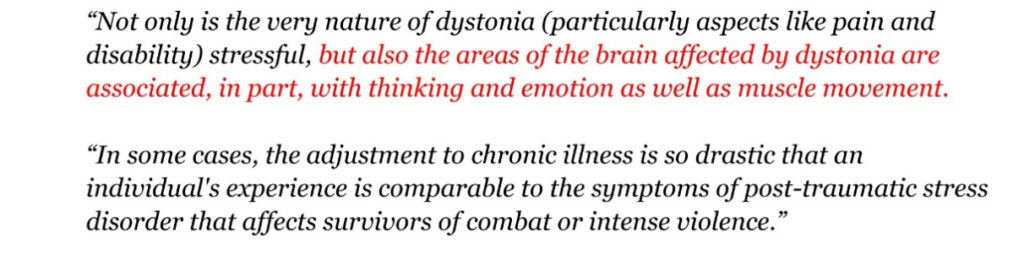
Yes, when she told us she had nothing to offer, I was upset, emotional, and began to sob in the exam room. With no answers, no hope in sight, I behaved exactly how a person who had sustained a TBI would behave; exactly how someone who suffered from the neurological disorders each doctor diagnosed me with (including rapid-onset dystonia) would behave. According to the Dystonia Medical Research Foundation’s website:

Finally, I behaved exactly how any human being would behave and react when told there is no treatment, no cure, no hope, and that her pain is not real, not physiological, but an emotional and mental health issue.

My brain injury has impacted me for over 20+ years, and I did not know it. I had suffered from drug-induced akathisia for 12+ years and did not know it. My dopamine has been dysregulated by medications, and yet they told me that akathisia could not cause subjective emotional pain, despite the role dopamine plays in our brains’ control centers for all our physiology — including our emotional states.

And if I suddenly can’t breathe due to a dystonic seizure of my respiratory muscles again, and it’s worse than the last attack? I can’t call for help. Even if I make it to the ER, it’s possible a nurse or doctor there will read through my chart and see, hidden in the medical language of those who have made their arbitrary dismissals: “Unstable, unsound. Don’t believe her.” And as I slowly suffocate, they could very well pat me on the head and tell me to calm down while they go find a sugar pill.

Well, at least a sugar pill won’t make my akathisia worse.

The article on “Talking to Your Doctor About Pain” that arrived in my Inbox the other morning made me bark a laughter as bitter as my chicory-laced coffee. It suggested that we don’t “shy away from ‘flowery language’ to describe [our] pain.” Flowery language? I’ve written a whole book of flowery language: flowery, plain, in-your-face-obscene language, medically accurate and appropriate language, all describing akathisia pain. I tried flowery. But my doctors didn’t hear it. They searched for categories in which to place me. And they’ve succeeded.

After the premier of my “How Bad Can Good Be” video, messages and emails came pouring into our site’s contact form (akathisia.life — the website my husband put up to help bring awareness to those who don’t have the resources we do). The messages all had horror stories, more horrific even than mine, and the single, common thread within the messages, from those who are suffering with akathisia:

“Thank you for writing the feelings I couldn’t express and conveying the horror I feel every day.”

My film has been shared on social media (it now has over 10k views on Facebook alone), and one chilling tagline was simple, and terrible, in its implications:

“It has a name.”

And now it also has a face. To capture the horrifying pain of akathisia, I created a painting with charcoal and photo collage: 


“Akathisia: It Has a Name,” photo collage and charcoal by J.A. Carter-Winward

This is my worst pain, far beyond “bed rest required.” Tell me, does the image above convey simply “uncomfortable” to you?

I’m going on 14+ years now with drug-induced, now tardive, chronic akathisia. As I’ve searched for a neurologist to be on my “care team” to help me deal with the drug-induced movement disorders, specifically help with ways to deal with the progression of drug-induced dystonia, they brush me off.

More to the point, they brush akathisia off. “Uncomfortable,” remember? Not so painful you want to end your life. Not so horrific you might take someone else’s with you to the other side. No. Uncomfortable.


If I were as “emotionally unsound” as they say in my medical chart, I’d say it’s almost like they want me to end my life, so they can write it off as “another tragic suicide caused by mental illness.”

Only, I’m not mentally ill, based on their own criteria. The only mental health issues with which I currently deal? The trauma of iatrogenesis and living, every day, with these conditions created by medications as I fight for my life.

Sorry, Doctor Uncomfortable and Co. I’m not going anywhere. And your patients? We are reading the same studies as you — and more. Because your motivation is to keep the status quo, aka your jobs, your relevance, your authority. So, you will only seek out studies that support what you believe. Call it confirmation bias, call it professional and publication bias, it’s all the same stuff. Our motivation? We want you to hear us, help us, and tell us what we do NOT know. Admit what you cannot do, and then do your jobs. HEAL. You broke it: fix it. And only pressure from you, the “dealers,” will change the way pharmaceutical companies create and market medications.

Our pain is real. And too many medical professionals have actually caused it by their willful ignorance, coupled with blind, medical arrogance. Yes, it takes two to form a lie: we are complicit. We want professionals to have the answers, so we give them the answers they need to give us our labels, medicate us, so we can go on with our lives. But the lies are killing us.

And when we begin trusting ourselves, and arming ourselves with the facts and studies coming out of Europe (the more-evolved cluster of First-World countries who provide universal healthcare to their citizenry), we will defer to them, because they are not motivated by the greed that riddles the polluted, crooked, for-profit healthcare system in the U.S.

For any of you who have taken medications that cause akathisia, arm yourselves with facts. You can google. Look it up. You’ll officially know more than most neurologists.

Watch my video. Look at the website for akathisia info. Read Robert Whitaker’s book, Mad in America, and the others out there who are trying to wake you up. We are trying to save your lives.

Then share what you learn like your life depends on it.

Because statistically… someone’s life does.

And yes, it will be uncomfortable. Challenging accepted wisdom usually is.

But look into the “face” of that pain, above. I promise you: Confronting your doctor with your truth isn’t nearly as “uncomfortable” as a pain that invades your entire being, finds every soft and vulnerable place within you, and rips it out with its teeth as you watch in horror…

Because “it” isn’t holding the gun to your head, or stringing the rope up in the rafters:

It’s you.

Flowery enough for you?


Previous articleTrauma Outside the Box: How the ‘Trauma-Informed’ Trend Falls Short
Next articleStudy Finds Deteriorating Mental Health Among Poor White Americans
J.A. Carter-Winward
https://www.jacarterwinward.com/akathisia


J.A. Carter-Winward is an award-winning poet, literary novelist, playwright, performer, and visual artist. Through 14 years of drug-induced akathisia, she authored 13 books. Off the medications seven months, she developed a cluster of neurological movement disorders that impact every facet of her life as a writer, public figure, and human being. Her upcoming collection, in-her-rest-less-ness: prose and poems, is a chronicle spanning 14+ years, written before she knew her suffering had a name.


Thank You Ms Carter-Winward and MIA.

Wednesday, October 10, 2018

How Well Do Neuroleptics Work?

madinamerica
Sandra Steingard, MD October 9, 2018

I recently received an email from Psychiatric Times highlighting current articles. Psychiatric Times is a newspaper that is distributed for free to psychiatrists in the US. To put this in context, the paper appears to be heavily subsidized by pharmaceutical company advertising, and its former editor, Ronald Pies, is a psychiatrist who has been critical of views expressed on Mad In America.

It caught my eye when the first article mentioned had the title, “Antipsychotic Discontinuation: When is it OK?” I clicked on the link to find a slide show authored by Brian Miller, M.D., P.D., M.P.H. which was titled, “Antipsychotics – To Respond or Not to Respond?

This was intriguing but confusing. Dr. Miller’s slides reviewed a paper just published in Schizophrenia Bulletin titled, “How Many Patients With Schizophrenia Do Not Respond to Antipsychotic Drugs in the Short Term? An Analysis Based on Individual Patient Data From Randomized Controlled Trials.” As pointed out in the slide show, the paper reported on a meta-analysis of 16 randomized controlled studies of antipsychotic drugs over the first 4-6 weeks of treatment. The authors found that a significant number of people do not respond or have relatively poor responses and the majority do not experience a remission of psychotic symptoms. While important, this article addressed short-term rather than long-term care. It is, nevertheless, informative. [Editor’s note: click here to see the MIA research news report on this paper.]

The senior author of the paper, Stefan Leucht, is a well-known and highly regarded expert in meta-analysis. As noted in the disclosures, he is also well-connected to many pharmaceutical companies. Meta-analysis is a statistical technique that allows for investigation of multiple studies. This provides a broader view of the available data in the field.

Since this was a study of response to drugs, it is important to understand how researchers define that term. When drug studies are conducted, subjects are assessed via rating scales which address the presence and severity of symptoms. A person is asked about a variety of experiences, such as hearing voices or feeling sad, and their responses are scored according to a predetermined rubric. Scores will thus fall on a continuum. The Positive and Negative Symptoms Scale (PANSS) is commonly used in antipsychotic drug trials. It includes 30 items and each can be scored on a scale of one (absent) to seven (extreme). Scores can therefore fall anywhere from 30 to 210.

There are many ways that researchers can analyze the myriad bits of data that are collected in these studies. Researchers are required to determine in advance how they will analyze their data, including what change would allow them to classify a person as a “responder.” Researchers can also define what would be considered a “remission.” To be counted as a responder, a person needs to have a certain percentage drop in the rating scale score from beginning to end of study. To be considered in remission, a person’s final score needs to fall below a set point on the scale. Unless one reads a study carefully, these distinctions can be missed and the notion of “response,” often cited in promotional material, can be misleading. Many studies consider a 20% reduction in score as a response. For some people, this can be a clinically insignificant change in symptoms. When large numbers of people are included in a study, it is easier to detect small differences among groups and these differences can reach statistical significance. A drug may be promoted as effective when what has been found is that the group of people who took it had a clinically minor reduction in symptoms as compared to the group on placebo.

The authors of this study, recognizing some of these challenges, set out to look more carefully at the range of response in the studies under review. They did this by not only reporting on the common 20% reduction often used as a marker for “response” but also 25%, 50%, and 75% reduction in the ratings.

The authors also analyzed the percentage of subjects who reached remission. In this case, remission was defined as not scoring above the “mildly present” rating on 8 key items of the PANSS.

The results:
Those who had no change or worsened – 19.8%
Less than 25% improvement – 43%
Less than 50% improvement – 66.5%
Less than 75% – 87%.

For those who were listed as “non-remission” – 66.9%.

To put this another way, only 33.1% of those in the studies were in remission. Only 33.5% had more than a 50% reduction in the rating scale.


The authors offer some insights into what I consider the paradoxes of common psychiatric practice as well as the problems with the way many research studies are conducted.

They begin their paper, “A considerable number of patients with schizophrenia do not respond to antipsychotic drugs.” They go on to cite what they describe as “vague statements” that “can be found in other reports and textbooks such as ‘most controlled trials continue to find a subgroup of 10-20% of patients who derive little benefit from typical neuroleptic drug therapy.’” They offer similar quotes from a variety of texts and conclude that “all of these statements are not based on firm evidence.”

In their discussion, the authors provide insight into the current state of pharmaceutical studies as well as offering their thoughts on why the response rates are so low:

“Pharmaceutical companies are trying to conduct large trials to assure statistical significance which leads to more recruitment pressure; the ‘patient clock’ is running down, thus patients are recruited quickly by professional centers; most of them are improved and stabilized on antipsychotics and enter an RCT after a short wash-out phase of a few days. As most of the antipsychotic effect occurs early on, further response may not be observed which could, at least partly, explain the relatively low number of responders. The increased ‘relapse’ rates on placebo also point to the direction that previous antipsychotics were beneficial.”

I found this rationale to be somewhat tortured. A major issue not addressed is that if people who are stabilized on neuroleptics are withdrawn abruptly and then restarted on drug or placebo, this would favor the drug since those given placebo would be experiencing withdrawal effects. But the authors bring up important issues about who gets recruited into studies these days and the extent to which they mirror the experiences of most people who are offered these drugs in clinical practice. Carl Elliott has written about this problem and it is critical to understand the context in which many drugs studies are conducted.

I still work as a psychiatrist and I know people who appear to benefit from these drugs. However, I want to use them in a way that is most helpful and minimizes harm. I also want to share the available data since this is what constitutes informed consent. What seems equally important is to provide this information to the public, including policy makers, since common misconceptions have had great influence on the structure of our system of care. Deinstitutionalization was driven by many forces but it is sustained by the notion that most people have robust responses to these drugs. We have a system of care and a societal expectation that these drugs are highly effective. When people are struggling in the community, the common response is that we need to adjust “their meds,” even though this is only likely to be helpful in a minority of cases.

Many of my colleague tend to focus on the need to find better drugs or design better studies as a way to address this problem. We tend to overlook so-called “alternative approaches,” such as the Hearing Voices Network. Oddly, given the context of this blog, these approaches are often discounted because they lack an evidence base. Sadly, adequate money to develop an evidence base is not offered because, well, they lack an evidence base. I suspect there is another bias at play.

In another recent email, this time from Medscape, there was a link to a video, “How to ‘Brand’ Psychiatry Today.” In the video, Dr. Stephen Strakowski, chair of the Department of Psychiatry at Dell Medical School at the University of Texas in Austin, proposes this definition of the specialty: “Psychiatry is a medical specialty that studies and treats disturbances in brain function that predominantly affect behavior — behavioral brain disorders.”

I appreciated Dr. Strakowski’s attempt to define our profession and I think he captures the way most psychiatrists conceptualize the field. This is informative. He both touts but then acknowledges the risks of the medical model: “We need to be careful to not confuse the medical model with using only medication for treatment. Rather, the medical model uses the medical approach to define the treatment evidence base and decide on the treatment.” Dr. Strakowski also suggests some limits to what psychiatrists should be doing and urges psychiatrists to let others work at the top of their expertise, “to allow those who are the best therapists to be the therapy providers, for example.” My major disagreement with him is that he does not challenge some of the negative consequences of applying the medical frame so broadly; even when he suggests that we consider social factors and invite others to offer psychotherapy, it is all done in the context of a medical conceptualization of the problems at hand. But that is a subject for another time.

For now, I would call upon physicians who claim to value the medical frame “to define treatment evidence and decide on treatment” to do just that. The evidence base suggests that it is time for us to reappraise the effectiveness of these drugs and shift our practice patterns accordingly.

Previous articleTwo-Thirds of Schizophrenia Patients Do Not Remit on Antipsychotics

Thank You Dr Steingard and MIA.

Tuesday, May 30, 2017

Risperdal Victims Candid Photos Speak Volumes

lawyers and settlements

. By
Detroit, MIMost jurors in Risperdal trials are likely sympathetic and at the same time shocked to discover how boys who developed female breasts have suffered. The public are likely reacting the same way after seeing a photo project online titled “Risperdal Boys”.

Photographer Richard Johnson has captured the pain and suffering and embarrassment of six young men (four others opted out before publication) who developed gynecomastia. Johnson explains on his website why these young men chose to go public. “They wanted the world to know what happened to them,” Johnson said. “Most of the young men in the project suffered alone; they’ve never met someone else with their condition.”

They are indeed brave men to step forward. One striking thing about the photographs is the background Johnson captured. For instance, Eddie from Oklahoma stands outside his run-down home. All six young men appear to fall into the ‘lower income’ category. And that comes as no surprise: Risperdal targeted patients on Medicaid, but it isn’t easy to get Medicaid to cover breast removal surgery.

Even if a family scrapes together enough money to pay for surgery, there are challenges and the outcome may not be satisfactory. Most boys who develop breasts also gain a lot of weight—up to 100 pounds a year. Doctors are reluctant to operate on a Risperdal patient until he loses weight, and the surgery is painful as well as costly. So much so that Michael from Cleveland, one of Johnson’s “Risperdal boys” had to undergo a “no frills” surgery with disappointing results. Another boy said his mother paid for the surgery but couldn’t afford general anesthesia, so he had breasts removed with a local.

“All agreed their struggle would be easier if they knew others were facing the same bullying and social isolation that they faced as a boy with breasts,” Johnson said. “There are potentially tens of thousands more guys out there that don’t know why they’ve developed breasts, and they don’t realize how many others? have similar stories.”

A few Risperdal victims have prevailed in their lawsuits and were awarded huge sums of money. Andrew Yount was awarded $70 million by a Philadelphia jury, for instance. But thousands of boys without the benefit of an experienced attorney haven’t received a dime, despite Johnson & Johnson (the Risperdal maker) being fined $1.2 billion in 2012 and a whopping $2.2 billion fine just one year later. And the mammoth drug company raked in $800 million in Risperdal sales last year alone.

Our hats off to photographer Richard Johnson and the six courageous men profiled in “Risperdal Boys”.

Wednesday, April 5, 2017

Withdrawal From Antipsychotics

madinamerica
By Peter Simons December 19, 2016

Editor’s note: We know that our reviews of the withdrawal literature are incomplete, and we urge readers to help us add to them. Please send study citations that are relevant to the withdrawal literature for antipsychotics to rwhitaker@madinamerica.com.
Mechanism of Action


The class of medications described as “antipsychotics” are a heterogeneous collection of chemicals with a variety of mechanisms of action. Even within the “second generation” of antipsychotic medications, colloquially referred to as “atypical” antipsychotics, receptor-binding profiles vary widely.

The first-generation antipsychotics, also known as standard neuroleptics, block dopamine receptors, and in particular, the D2 receptor (a dopamine receptor subtype.) The second-generation antipsychotics are thought to be more broad-acting, blocking dopamine receptors and perturbing other neurotransmitter systems as well. The specific effects of each individual medication on the dopaminergic and other neurotransmitter systems vary as well.
Animal Studies

Studies on rats show some tolerance and withdrawal effects, although rats are sometimes considered a poor analogue for human neurochemistry (see Pouzet et al., 2003). Tolerance effects are compensatory changes that oppose the direct effects of a drug, e.g., a drug’s blockade of dopamine receptors induces an increase in dopamine receptors. These compensatory neurophysiological changes are thought to be a primary cause of withdrawal and rebound symptoms.
Csernansky, J. G., Wrona, C. T., Bardgett, M. E., Early, T. S., & Newcomer, J. W. (1993). Subcortical dopamine and serotonin turnover during acute and subchronic administration of typical and atypical neuroleptics. Psychopharmacology (Berl), 110(1-2), 145-151. PubMed Link

Rats develop tolerance to second-generation antipsychotic medications.

2) Stanford, J. A., & Fowler, S. C. (1997). Subchronic effects of clozapine and haloperidol on rats’ forelimb force and duration during a press-while-licking task. Psychopharmacology (Berl), 130(3), 249-253. PubMed Link

In general, in rats, clozapine and haloperidol had similar effects, although clozapine induced high levels of tolerance in terms of time-on-task measures.

3) Stanford, J. A., & Fowler, S. C. (1997). Similarities and differences between the subchronic and withdrawal effects of clozapine and olanzapine on forelimb force steadiness. Psychopharmacology (Berl), 132(4), 408-414. PubMed Link

In rats, tolerance and withdrawal effects were observed for clozapine and not for olanzapine; these were measured by tremors in the rats.

4) Goudie, A. J., Smith, J. A., Robertson, A. & Cavanagh, C. (1999). Clozapine as a drug of dependence. Psychopharmacology (Berl), 142(4): 369-374. PubMed Link

Rats treated with high doses of clozapine experienced withdrawal-related hyperthermia which dissipated over 4 days after discontinuation of the drug.

5) Jardemark, K. E., Liang, X., Arvanov, V., & Wang, R. Y. (2000). Subchronic treatment with either clozapine, olanzapine or haloperidol produces a hyposensitive response of the rat cortical cells to N-methyl-D-aspartate. Neuroscience, 100(1), 1-9. PubMed Link

Haloperidol, clozapine, and olanzapine were shown to exhibit tolerance effects after affecting the glutamergic system in rats. Haloperidol exhibited further effects on neurophysiology. Compensatory neurochemical responses were observed as well.

6) Goudie, A. J., Smith, J. A., & Halford, J. C. (2002). Characterization of olanzapine-induced weight gain in rats. J Psychopharmacol, 16(4), 291-296. PubMed Link

Rats given olanzapine exhibited significant weight gain within one day of treatment; after ceasing treatment rats experienced rapid weight loss.

7) Pouzet, B., Mow, T., Kreilgaard, M., & Velschow, S. (2003). Chronic treatment with antipsychotics in rats as a model for antipsychotic-induced weight gain in human. Pharmacol Biochem Behav, 75(1), 133-140. PubMed Link

Humans given haloperidol do not experience weight gain, while humans given olanzapine do. However, male rats given either substance do not experience weight gain, while female rats given either substance do experience weight gain. The researchers conclude that rats are not suitable for modeling this effect.

8) Cooper, G. D., Pickavance, L. C., Wilding, J. P., Halford, J. C., & Goudie, A. J. (2005). A parametric analysis of olanzapine-induced weight gain in female rats. Psychopharmacology (Berl), 181(1), 80-89. PubMed Link

Rats given olanzapine exhibited increased eating behaviors, insulin resistance, and compensatory adiponectin levels. These compensatory changes could lead to withdrawal and rebound effects.

9) Cooper, G. D., Pickavance, L. C., Wilding, J. P., Harrold, J. A., Halford, J. C., & Goudie, A. J. (2007). Effects of olanzapine in male rats: enhanced adiposity in the absence of hyperphagia, weight gain or metabolic abnormalities. J Psychopharmacol, 21(4), 405-413. PubMed Link

Increased visceral adiposity is seen in both male and female rats when given olanzapine, despite male rats’ lack of increased weight gain. The researchers conclude that some of the neurophysiological effects of antipsychotics can still be modeled in male rats, despite their lack of obvious effects such as weight gain.

10) Goudie, A. J., Cole, J. C., & Sumnall H. R. (2007). Olanzapine withdrawal/discontinuation-induced hyperthermia in rats. Prog Neuropsychopharmacol Biol Psychiatry, 31(7), 1500-1503. PubMed Link

In rats, high doses of olanzapine induce hypothermia, and the discontinuation of olanzapine induces withdrawal effects of hyperthermia, which dissipate after 3-4 days. The neurophysiological reason for this is unclear.
Withdrawal Symptoms

11) Dilsaver, S. C., & Alessi, N. E. (1988). Antipsychotic withdrawal symptoms: Phenomenology and pathophysiology. Acta Psychiatrica Scandinavica, 77, 241-246. PubMed Link

The authors review evidence that non-dyskinetic withdrawal symptoms from antipsychotics include nausea, emesis, anorexia, diarrhea, rhinorrhea, diaphoresis, myalgia, paresthesia, anxiety, agitation, restlessness, and insomnia. The authors discuss the symptoms observed before psychotic relapse and its relation to medication withdrawal.

12) Lang, A. E. (1994). Withdrawal akathisia: Case reports and a proposed classification of chronic akathisia. Mov Disord 9(2), 188-192. PubMed Link

Description of two case reports in which withdrawal akathisia was observed.

13) Amore, M., & Zazzeri, N. (1995). Neuroleptic malignant syndrome after neuroleptic discontinuation. Prog Neuropsychopharmacol Biol Psychiatry, 19(8), 1323-1334. PubMed Link

Although many withdrawal symptoms may be related to cholinergic rebound, rare cases of neuroleptic malignant syndrome have been observed and may be due to compensatory reactions in the dopaminergic system.

14) Schultz, S. K., Miller, D. D., Arndt, S., Ziebell, S., Gupta, S., & Andreasen, N. C. (1995). Withdrawal-emergent dyskinesia in patients with schizophrenia during antipsychotic discontinuation. Biol Psychiatry, 38(11), 713-719. PubMed Link

31% of patients with no diagnosis of tardive dyskinesia developed withdrawal-related dyskinesia after discontinuation of antipsychotic medication.

15) Anand, V. S., & Dewan, M. J. (1996). Withdrawal-emergent dyskinesia in a patient on risperidone undergoing dosage reduction. Ann Clin Psychiatry, 8(3), 179-182. PubMed Link

Case report of withdrawal dyskinesia as a result of risperidone dose reduction.

16) Shiovitz, T.M., Welke, T.L., Tigel, P.D., Anand, R., Hartman, R.D., Sramek, J.J., Kurtz, N.M., & Cutler, N.R. (1996). Cholinergic rebound and rapid onset psychosis following abrupt clozapine withdrawal. Schizophr Bull, 22(4), 591-595. PubMed Link

Mild withdrawal symptoms after discontinuation of clozapine are associated with cholinergic rebound and may be prevented by use of an anticholinergic medication during discontinuation. Mesolimbic supersensitivity is discussed as a potential neurophysiological cause for rapid-onset rebound psychosis.

17) Staedt, J., Stoppe, G., Hajak, G., & Ruther, E. (1996). Rebound insomnia after abrupt clozapine withdrawal. 1&) Eur Arch Psychiatry Clin Neurosci, 246(2), 79-82. PubMed Link

Case report in which rebound insomnia was observed after discontinuation of clozapine; symptoms resolved upon re-institution of clozapine. The authors theorize GABAergic or antiglutamatergic pathways for the explanation of this symptomology.

18) Lee, J. W., & Robertson, S. (1997). Clozapine withdrawal catatonia and neuroleptic malignant syndrome: a case report. Ann Clin Psychiatry, 9(3), 165-169. PubMed Link

Case report documenting “excited malignant catatonia” after abrupt clozapine withdrawal. The additional use of classical antipsychotics transformed the presentation into something “resembling” neuroleptic malignant syndrome.

19) Stanilla, J. K., de Leon, J., & Simpson, G. M. (1997). Clozapine withdrawal resulting in delirium with psychosis: a report of three cases. J Clin Psychiatry, 58(6), 252-255. PubMed Link

In these three cases, clozapine discontinuation resulted in delirium with psychosis, which the authors theorize may be due to cholinergic rebound. The authors propose slow tapering for clozapine discontinuation and/or the addition of a medication with anticholinergic effects, such as thioridazine.

20) Rowan, A. B., & Malone, R. P. (1997). Tics with risperidone withdrawal. J Am Acad Child Adolesc Psychiatry, 36(2), 162-163. PubMed Link

This case report describes Tourette-like symptoms in a child who was abruptly discontinued risperidone after 8 days of treatment, due to side effects. The psychotic symptoms that had led to the prescription of risperidone were resolved without further medication. After a second hospital admission, the child was again prescribed risperidone, which was again discontinued due to side effects; this time haloperidol was administered just after discontinuation of risperidone. Tic symptoms did not appear.

21) Rosebush, P. I., Kennedy, K., Dalton, B., & Mazurek, M. F. (1997). Protracted akathisia after risperidone withdrawal. The American Journal of Psychiatry, 154(3), 437-8. PubMed Link

This case report documents a patient prescribed haloperidol who developed parkinsonism and akathisia. Switching to risperidone did not resolve the side effects. Discontinuation of risperidone was associated with a severe increase in akathisia and parkinsonism symptomology. Lorazepam did not resolve these symptoms. Propranalol treatment finally resolved the akathisia symptoms.

22) Ahmed, S., Chengappa, K.N., Naidu, V.R., Baker, R.W., Parepally, H., & Schooler, N.R. (1998). Clozapine withdrawal-emergent dystonias and dyskinesias: a case series. J Clin Psychiatry, 59(9), 472-477. PubMed Link

In addition to the potential for supersensitivity psychosis, clozapine withdrawal may induce severe movement disorders. Slowly tapering clozapine discontinuation, anticholinergic medication, and resumption of antipsychotic medication may resolve these symptoms.

23) Llorca, P. M., Penault, F., Lançon, C., Dufumier, E., & Vaiva, G. (1999). The concept of supersensitivity psychosis. The particular case of clozapine. Encephale, 25(6), 638-644. PubMed Lin

Withdrawal of clozapine can induce supersensitivity psychosis.

24) Szafrański, T. & Gmurkowski, K. (1999). Clozapine withdrawal. A review. Psychiatr Pol, 33(1), 51-67. PubMed Link

Discontinuation of clozapine is associated with higher risk of relapse than discontinuation of other antipsychotic medications. The authors advise slow withdrawal, cross-titration with other medications, and caution to beware of cholinergic rebound symptoms as well.

25) Tollefson, G.D., Dellva, M.A., Mattler, C.A., Kane, J.M., Wirshing, D.A., & Kinon, B.J. (1999). Controlled, double-blind investigation of the clozapine discontinuation symptoms with conversion to either olanzapine or placebo. The Collaborative Crossover Study Group. J Clin Psychopharmacol, 19(5), 435-443. PubMed Link

Clozapine withdrawal symptoms were more likely if the patient was switched to placebo rather than to another antipsychotic (olanzapine).

26) Lore, C. (2000). Risperidone and withdrawal dyskinesia. Journal of the American Academy of Child and Adolescent Psychiatry, 39(8), 941. PubMed Link

This case report documents a child discontinued risperidone who exhibited withdrawal dyskinesia. Symptoms resolved upon administration of quetiapine.

27) Nishimura, K., Tsuka, M., & Horikawa, N. (2001). Withdrawal-emergent rabbit syndrome during dose reduction of risperidone. Eur Neuropsychopharmacol, 11(4), 323–324. PubMed Link

Case report depicting rare “rabbit syndrome” resulting from dose reduction of risperidone. Trihexyphenidyl anticholinergic therapy resolved the symptoms. The authors theorize that the serotonergic system may be implicated in development of rabbit syndrome.

28) Apud, J. A., Egan, M. F., & Wyatt, R. J. (2003). Neuroleptic withdrawal in treatment-resistant patients with schizophrenia: Tardive dyskinesia is not associated with supersensitive psychosis. Schizophrenia Research, 63(1-2), 151-160. PubMed Link

The authors conclude that supersensitivity of the dopaminergic system (and thus, supersensitivity psychosis) is not correlated with tardive dyskinesia, but rather follows a different mechanism.

29) Yeh, A.W., Lee, J.W., Cheng, T.C., Wen, J.K., & Chen, W.H. (2004). Clozapine withdrawal catatonia associated with cholinergic and serotonergic rebound hyperactivity: A case report. Clin Neuropharmacol, 27(5), 216-218. PubMed Link

Case report of catatonia after abrupt discontinuation of clozapine. Symptoms resolved after reinstatement of clozapine. The authors theorize serotonergic hyperactivity as well as cholinergic rebound as the cause of the withdrawal symptoms.

30) Seppälä, N., Kovio, C., & Leinonen, E. (2005). Effect of anticholinergics in preventing acute deterioration in patients undergoing abrupt clozapine withdrawal. CNS Drugs, 19(12), 1049-1055. PubMed Link

Clozapine withdrawal was associated with significant rapid deterioration in psychological health. Those taking anticholinergic medications during withdrawal were less likely to experience this deterioration.

31) Kafantaris, V., Hirsch, J., Saito, E., & Bennett, N. (2005). Treatment of withdrawal dyskinesia. Journal of the American Academy of Child & Adolescent Psychiatry, 44(11), 1102-1103. PubMed Link

This case report depicts a patient tapered off aripiprazole and started on quetiapine who developed dyskinesia three weeks after discontinuation of aripiprazole. Treatment with a branched-chain amino acid (BCAA) mixture appeared to reduce the severity of dyskinesia symptoms.

32) Komatsu, S., Kirino, E., Inoue, Y., Arai, H. (2005). Risperidone withdrawal-related respiratory dyskinesia: A case diagnosed by spirography and fibroscopy. Clin Neuropharmacol, 28(2), 90-93. PubMed Link

Case report of a patient, abruptly discontinued risperidone, who exhibited withdrawal-related tardive dyskinesia of multiple kinds, including respiratory, which is potentially lethal.

33) Michaelides, C., Thakore-James, M., & Durso, R. (2005). Reversible withdrawal dyskinesia associated with quetiapine. Mov Disord, 20(6), 769–770. PubMed Link

Case report of a patient who abruptly discontinued quetiapine and developed acute dyskinesia as a result. Reintroduction of quetiapine resolved the symptoms. Compensatory dopaminergic response to quetiapine is theorized to be the cause.

34) Mendhekar, D.N., & Duggal, H.S. (2006). Isolated oculogyric crisis on clozapine discontinuation. J Neuropsychiatry Clin Neurosci, 18(3), 424–425. PubMed Link

Case report of abrupt discontinuation of clozapine after 6 weeks, resulting in oculogyric crisis (uprolling of eyeballs lasting for over an hour at a time) in the absence of other cholinergic rebound symptoms. It is theorized that the length of clozapine treatment was not enough to create a cholinergic supersensitivity; therefore dopaminergic supersensitivity may be implicated in the oculogyric crisis. This indicates that the dopaminergic system may be responsible for some movement disorder effects.

35) Moncrieff, J. (2006). Does antipsychotic withdrawal provoke psychosis? Review of the literature on rapid onset psychosis (supersensitivity psychosis) and withdrawal-related relapse. Acta Psychiatr Scand, 114(1), 3-13. PubMed Link

Rapid-onset psychosis, especially prevalent when withdrawing from clozapine, can occur even in patients with no psychiatric history, making it unlikely to be a relapse of a preexisting condition. Risk of relapse may also be increased by the use of antipsychotic medications.

36) Moncrieff, J. (2006). Why is it so difficult to stop psychiatric drug treatment? It may be nothing to do with the original problem. Med Hypotheses, 67(3), 517-523. PubMed Link

Withdrawal from psychiatric medications may induce somatic symptoms that can be mistaken for relapse; psychotic symptoms as a rebound syndrome, especially in the case of clozapine; psychological withdrawal symptoms that may be mistaken for relapse or may induce actual relapse; and relapse induced by the neurophysiological effects of withdrawal of the substance.

37) Oral, E.T., Altinbas, K., & Demirkiran, S. (2006). Sudden akathisia after a ziprasidone dose reduction. Am J Psychiatry, 163(3), 546. PubMed Link

Five cases of dyskinesia, abruptly appearing after dose reduction of ziprasidone, are reported.

38) Chouinard, G. & Chouinard, V. (2008). Atypical antipsychotics: CATIE study, drug-induced movement disorder and resulting iatrogenic psychiatric-like symptoms, supersensitivity rebound psychosis and withdrawal discontinuation syndromes. Psychother Psychosom, 77, 69-77. PubMed Link

The authors argue that the lack of efficacy of risperidone and quetiapine when compared with olanzapine (as demonstrated in the CATIE study) could be due to supersensitivity psychosis rather than simple lack of efficacy. The authors note that approximately half of all patients given antipsychotics (combining both “classical” and “atypical”) experience movement disorders including parkinsonism, akathisia, and tardive dyskinesia. These movement disorders are associated with high levels of psychiatric symptoms as well, including “suicidal and depressive symptoms” (p. 72). Additionally, these movement disorders produce symptoms which can be mistaken for both positive and negative symptoms of schizophrenia, thus leading to misdiagnosis and mistreatment (see also Margolese, Chouinard, Walters-Larach, & Beauclair, 2001).

39) Correll, C. U. (2008). Antipsychotic use in children and adolescents: Minimizing adverse effects to maximize outcomes. J Am Acad Child Adolesc Psychiatry, 47(1), 9-20. Also see, Correll, C. U. (2008). Assessing and maximizing the safety and tolerability of antipsychotics used in the treatment of children and adolescents. J Clin Psychiatry, 69(suppl 4), 26-36.

In these two articles, Correll lists numerous rebound/withdrawal symptoms and the neurochemical systems implicated in them. Correll links drugs acting on the D₂ system to withdrawal psychosis, mania, agitation, akathisia, and withdrawal dyskinesia. He links 5-HT₁A partial agonist drugs to EPS/akathisia. Drugs acting on 5-HT₂A are associated with EPS/akathisa and psychosis. Action on 5-HT₂C is linked to decreased appetite. α₁ is linked to tachychardia and hypertension; α₂ is linked to hypotension and dizziness. H₁ is associated with agitation, insomnia, anxiety, EPS. M₁ (central) is associated with agitation, confusion, psychosis, anxiety, insomnia, sialorrhea, EPS/akathisia. M₂-₄ (peripheral) is linked to diarrhea, diaphoresis, nausea, vomiting, bradycardia, hypotension, and syncope.


40) Ahmad, M.T., & Prakash, K.M. (2010). Reversible hyperkinetic movement disorder associated with quetiapine withdrawal. Mov Disord, 25(9), 1308–1309. PubMed Link

Case report. Two days after discontinuing quetiapine abruptly, patient developed a complex hyperkinetic movement disorder. Reinstitution of quetiapine resolved the symptoms. Withdrawal effects may have been caused by compensatory up-regulation of the dopaminergic or serotonergic systems.

41) Ozcan, S., Soydan, A., & Tamam, L. (2012). Supersensitivity psychosis in a case with clozapine tolerance. Eur Rev Med Pharmacol Sci, 16(4 Suppl), 70-73. PubMed Link

Patients develop a tolerance to clozapine, and thus develop dopamine supersensitivity, which increases the likelihood of psychotic symptom relapse even while remaining medication compliant.

Numerous withdrawal symptoms have been reported with both classical and second-generation antipsychotics, and fit into several categories. Physical withdrawal symptoms may occur; rebound psychosis is found especially in discontinuation of clozapine; other rebound syndromes have been observed; and psychological withdrawal symptoms are possible as well.

42) Wadekar, M., & Syed, S. (2010). Clozapine-withdrawal catatonia. Psychosomatics, 51(4), 355. PubMed Link

In this case report, abrupt discontinuation of clozapine led to catatonia and autonomic instability, which resolved upon re-initiation of clozapine treatment.

43) Sansone, R. A., & Sawyer, R. J. (2013). Aripiprazole withdrawal: A case report. Innov Clin Neurosci, 10(5-6), 10-12. PubMed Link

In this case report, a patient experienced withdrawal symptoms after abruptly discontinuing aripiprazole. The researchers theorize the symptoms may be due to serotonergic causes.

44) Cerovecki, A., Musil, R., Klimke, A., Seemüller, F., Haen, E., Schennach, R., … Riedel, M. (2013). Withdrawal symptoms and rebound symptoms associated with switching and discontinuing atypical antipsychotics: Theoretical background and practical recommendations. CNS Drugs, 27, 545-572. doi: 10.1007/s40263-013-0079-5 PubMed Link

Second generation antipsychotics affect a number of receptor systems within the brain. All serve to block dopamine D2 receptors and serotonin 5-HT2A receptors, while some have additional effects on other dopamine and serotonin receptors, as well as the histaminergic, muscarinergic, and adrenergic receptor systems. Medications that act on the histaminergic receptors may moderate weight gain. Medications that block the M1 muscarinergic receptors may help treat EPMS in schizophrenic patients, but the authors note the propensity for side effects such as reduced cognitive function, dry mouth, tachycardia, obstipation, and urinary retention. Medications that block the α2 adrenergic system are used to prevent male sexual dysfunction, improve mood, and may increase cognitive function. Because of these effects, withdrawal and rebound symptoms may involve any of these systems.

The authors link early dyskinesia to an increase in dopamine caused by the body’s attempt to self-regulate dopamine levels after receptor blockage by medication; they link late dyskinesia to hypersensitivity of certain dopamine receptors. They link parkinsonism to a reduction in striatal dopamine. The authors state that the chemical mechanism causing akathisia and neuroleptic malignant syndrome are unknown, though they present a theory that a nearly full blockage of D2 receptors may be responsible for the latter.

The authors warn of withdrawal dyskinesia, rebound parkinsonism, and rebound akathisia after abrupt discontinuation of D2 receptor antagonists. Like tardive dyskinesia, supersensitivity psychosis might be due to an increase in dopamine receptor sensitivity after a medication blocks receptors. For clozapine and quetiapine in particular, as well as olanzapine, there is evidence for the danger of supersensitivity psychosis and dystonias and dyskinesias after withdrawal.

Rebound psychosis can be differentiated from reemergence of an underlying psychosis in several ways: symptoms should resolve faster if the medication is restarted in rebound psychosis; and other withdrawal symptoms such as nausea, vomiting, insomnia, diarrhea, agitation, headache, and sweating (cholinergic rebound symptoms) may accompany rebound psychosis.

The authors say it is unknown what mechanism is responsible for rebound-induced hyperthermia (associated with the discontinuation of olanzapine), but that serotonin receptors may be involved.

Withdrawal from a substance with anticholinergic properties such as clozapine and olanzapine may result in cholinergic rebound (nausea, vomiting, sweating, sleeping problems, flu-like symptoms, and psychosis). The psychotic symptoms are indistinguishable from dopaminergic withdrawal symptoms of psychosis.

After discontinuing an antipsychotic with adrenergic effects, rebound symptoms may include an increase in blood pressure and fear.

45) Alblowi, M. A., & Alosaimi, F. D. (2015). Tardive dyskinesia occurring in a young woman after withdrawal of an atypical antipsychotic drug. Neurosciences (Riyadh), 20(4), 376-379. PubMed Link

Case report of a patient experiencing 9 months of withdrawal dyskinesia after discontinuation of risperidone. Symptoms resolved after administration of amantadine.

46) Li, M. (2016). Antipsychotic-induced sensitization and tolerance: Behavioral characteristics, developmental impacts, and neurobiological mechanisms. J Psychopharmacol , 30(8), 749-770. PubMed Link

The author provides a thorough review of neurophysiological sensitization and tolerance effects to antipsychotic medications, which has implications for withdrawal effects.

Switching antipsychotic medications as a withdrawal strategy.

Switching antipsychotic medications may reduce the possibility of withdrawal effects if done with careful consideration to the neurophysiological properties of each medication. However, withdrawal effects are still possible.

47) Correll, C. U. (2006). Real life switching strategies with second-generation antipsychotics. J Clin Psychiatry, 67,160-161.

Abrupt switching between medications is far more likely to cause withdrawal and rebound effects. However, slow cross-titration may increase the likelihood of side effects and may maintain side effects from the first medication, and may be confusing for the client. Correll recommends an individualized strategy. Correll cautions that although previous research shows no difference in effectiveness between various switching strategy, those studies were industry-sponsored and have methodological problems.

48) Correll, C. U. (2008). Antipsychotic use in children and adolescents: Minimizing adverse effects to maximize outcomes. J Am Acad Child Adolesc Psychiatry, 47(1), 9-20; Correll, C. U. (2008). Assessing and maximizing the safety and tolerability of antipsychotics used in the treatment of children and adolescents. J Clin Psychiatry, 69(suppl 4), 26-36.

Correll recommends slow cross-tapering when switching medications. Correll urges caution when switching from a medication that affects the histaminergic and muscarinergic systems to a medication that has less effect on these symptoms.

49) Cerovecki, A., Musil, R., Klimke, A., Seemüller, F., Haen, E., Schennach, R., … Riedel, M. (2013). Withdrawal symptoms and rebound symptoms associated with switching and discontinuing atypical antipsychotics: Theoretical background and practical recommendations. CNS Drugs, 27, 545-572. doi: 10.1007/s40263-013-0079-5 PubMed Link

The findings here are hampered by lack of specific switching trials for many of the medications listed here. When studies of switching do exist, they are likely industry funded and do not discuss the possibility of adverse effects as rebound or withdrawal symptoms.

The evidence for the efficacy of switching antipsychotics is limited. An analysis of the CATIE study showed that switching to a new antipsychotic does not improve outcome compared with those who remained on current medication. Additionally, switching makes patients more likely to stop taking their medication altogether.

The authors recommend plateau cross-titrated switching strategies in almost all cases, although they state that for drugs with a longer half-life, more abrupt switching is less problematic. However, they note that increased risk of adverse events occurs when the patient is taking two or more antipsychotic medications simultaneously, as one would during plateau cross-titration.

Switching from a medication that blocks D2 receptors to one that blocks less or activates D2 receptors may result in normalization of prolactin levels and resolution of sexual dysfunction.

Switching from a second generation AP with high 5-HT2A receptor affinity to a first generation AP may result in the resumption of negative and cognitive symptoms and development of EPMS.

Switching treatment from clozapine or olanzapine (blocking 5-HT2C receptors) to risperidone, aripiprazole, or ziprasidone may result in resolution of weight gain problems. This may also result in decreased sedation and less likelihood of rebound insomnia.

50) Margolese, H. C., Chouinard, G., Kolivakis, T. T., Beauclair, L., Miller, R, & Annable, L. (2005). Tardive dyskinesia in the era of typical and atypical antipsychotics. Part 2: Incidence and management strategies in patients with schizophrenia. Canadian Journal of Psychiatry, 50(11), 703-714. PubMed Link

In cases in which TD is an adverse effect from use of classical antipsychotics, the authors recommend discontinuation of classical antipsychotic treatment, but substituting them with second-generation antipsychotics to reduce the risk of withdrawal-onset TD.
Tapering Success Rates

51) Cohen D. (2007). Helping individuals withdraw from psychiatric drugs. Journal of College Student Psychotherapy, 21(3-4), 199–224. ResearchGate Link

This article offers advice to mental health professionals regarding strategies for discontinuation of psychiatric drugs. The author notes that there is a dearth of evidence regarding success rates and best tapering practices, but advises slow tapering off the medications in general.
Consumer Accounts of Discontinuation

Consumers generally experience poor communication and low levels of support from their mental health service providers around the experience of discontinuation. This leads to poorly-conducted discontinuation attempts, which involve severe withdrawal symptoms. Thus, many consumers return to the medication, believing that discontinuation is not possible or that it results in a resurgence of their disorder.

52) Roe, D., Goldblatt, H., Baloush-Klienman, V., Swarbrick, M., & Davidson, L. (2009). Why and how people decide to stop taking prescribed psychiatric medication: Exploring the subjective process of choice. Psychiatric Rehabilitation Journal, 33(1), 38–46. doi:10.2975/33.1.2009.38.46 PubMed Link

Patients decided to discontinue their medications for a number of reasons, including feeling loss of things previously cared about (i.e. inability to concentrate, sexual side effects, lack of connection to important parts of self), condescension and lack of care from healthcare agents, alienation of being a medication-taker, and feeling that the fear-based pressure to take medications was not a valid reason to be continuing them.

53) Salomon, C., & Hamilton, B. (2013). ‘All roads lead to medication?’ Qualitative responses from an Australian first-person survey of antipsychotic discontinuation. Psychiatric Rehabilitation Journal, 36(3), 160-165. PubMed Link

Participants report not receiving much information about discontinuation, feeling unheard by their treatment provider around discontinuation, and experiencing significant withdrawal symptoms during discontinuation. Unsupported discontinuation led to many negative effects for the participants, leading most of them to eventually resume taking antipsychotic medications.

51) Salomon, C., Hamilton, B., & Elsom, S. (2014). Experiencing antipsychotic discontinuation: Results from a survey of Australian consumers. Journal of Psychiatric and Mental Health Nursing, 21, 917-923. doi: 10.1111/jpm.12178 PubMed Link

Consumers often discontinue antipsychotic medications without the knowledge of their clinician. Almost half of the consumers in the study reported that their doctors did not communicate regarding how long they would need to be on the medication. Of those that did communicate, almost ¾ stated that the patient would need to be on the medication indefinitely or for life. Over half the consumers in the study stated that they were not informed about potential withdrawal effects. More than half the consumers in the study stopped their medications without their doctors’ knowledge, usually because of adverse effects from the medication. More than ¾ of the participants reported withdrawal symptoms after discontinuing their medication. Withdrawal effects included insomnia, mood change, anxiety, agitation, psychotic symptom increase, difficulty concentrating, paranoia, headaches, memory loss, nightmares, nausea, and vomiting.
Additional References

Lieberman, J. A., Stroup, T. S., McEvoy, J. P., Swartz, M. S., Rosenheck, R. A., Perkins, D. O., . . . Hsiao, J. K. (2005). Effectiveness of antipsychotic drugs in patients with chronic schizophrenia. The New England Journal of Medicine, 353(12), 1209-23. PubMed Link

“The majority of patients in each group discontinued their assigned treatment owing to inefficacy or intolerable side effects or for other reasons. Olanzapine was the most effective in terms of the rates of discontinuation, and the efficacy of the conventional antipsychotic agent perphenazine appeared similar to that of quetiapine, risperidone, and ziprasidone. Olanzapine was associated with greater weight gain and increases in measures of glucose and lipid metabolism.” (p. 1209).

Margolese, H. C., Chouinard, G., Walters-Larach, V., Beauclair, L. (2001). Relationship between antipsychotic-induced akathisia and tardive dyskinesia and suicidality in schizophrenia: Impact of clozapine and olanzapine. Acta Psychiatr Belg, 101, 128-144. ResearchGate Link

Duxbury, J., Wright, K., Bradley, D., & Barnes, P. (2010). Administration of medication in the acute mental health ward: Perspective of nurses and patients. International Journal of Mental Health Nursing, 19(1), 53-61. PubMed Link

Patient reports involve general support for medication, but a desire for more communication between providers and patients, as well as more support in dealing with side effects of medication.

Previous articleWithdrawal from Antidepressants
Next articleWithdrawal from Mood Stabilizers


Peter Simons
MIA-UMB News Team: Peter Simons comes from a background in the humanities where he studied English, philosophy, and art. Now working on his PhD in Counseling Psychology, his recent research has focused on conflicts of interest in the psychopharmaceutical research literature, the use of antipsychotic medications in the treatment of depression, and the general philosophical and sociopolitical implications of psychiatric taxonomy in diagnosis and treatment.


Thank You Mr Simons and MIA.