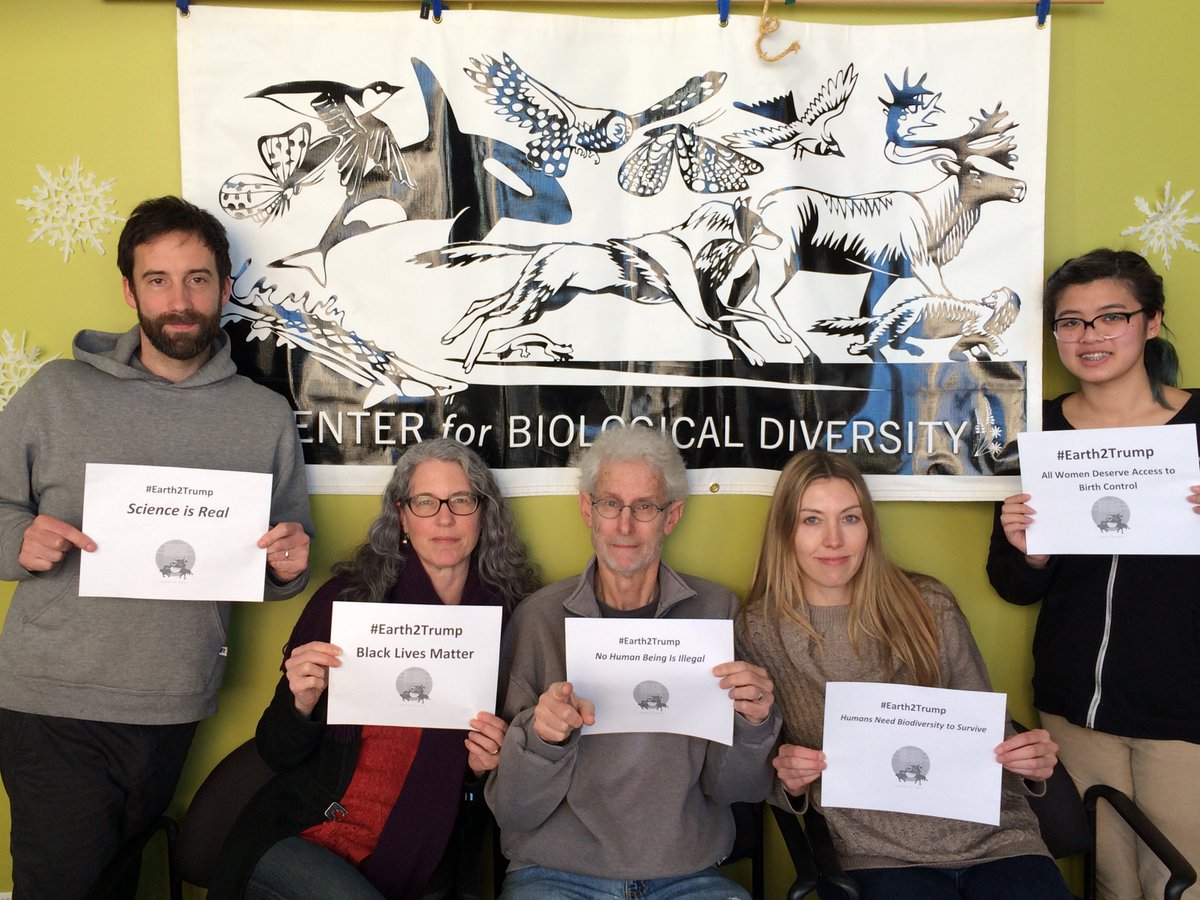
Wonder how many researchers can get away with publicly attacking the President and get a federal grant at the same time?

Here’s the grant to Drazen. Note the dates.
Read All About It.


Over the years, federal and university researchers showed 2,4-D was worrisome on its own. Studies found increased odds of developing non-Hodgkin lymphoma, hypothyroidism and Parkinson’s disease among people who used the chemical as part of their jobs… the WHO’s cancer research agency ruled that 2,4-D is a possible carcinogen.”GE produce depends on high volume use of herbicides
Even some scientists who have spent their professional lives eradicating weeds oppose the new genetically modified crops and the chemical future they foreshadow. “Those herbicide increases are not OK,” said David Mortensen, a professor of weed and applied plant ecology at Pennsylvania State University. “To me, that is unconscionable that we can be OK with that, and I’m not an anti-chemical radical.”
“But the Obama administration’s EPA now says it is safe to allow 41 times more 2,4-D into the American diet than before he took office. To reach that conclusion, the Tribune found, the agency’s scientists changed their analysis of a pivotal rat study by Dow, tossing aside signs of kidney trouble that Dow researchers said were caused by 2,4-D.” (Chicago Tribune)
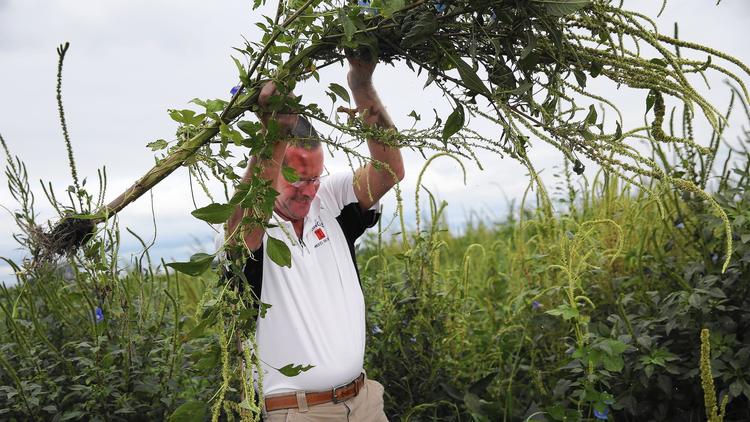
“In the US, where approximately 90 percent or more of all cotton, soy, and corn plantings are of glyphosate-tolerant GMO varieties, the acres of farmland harboring glyphosate-resistant weeds nearly doubled between 2010 and 2012, from 32.6 million acres to 61.2 million acres.” (Modern Farmer, 2016)EPA approved increasingly toxic chemical weapons for use in GMO food crops
“Monsanto’s Roundup Ready crops created an environmental disaster by causing infestation of tens of millions of acres of farmland with herbicide-resistant weeds and spurring an enormous increase in pesticide use.” (Attorney Paul Achifoff, Sustainable Pulse, 2017)
“One of the major disadvantages of dicamba compared to glyphosate is that it is much more “volatile,” meaning it easily becomes airborne and drifts away from where it is applied. Historically, dicamba has been used in agriculture primarily as a pre-emergent (applied to the soil to kill weed seeds prior to planting a crop), since it could not be applied directly to crop plants.”(Modern Farmer, 2016)The volatility of dicamba drifts between farmers’ fields has caused massive damage to crops not targeted by the poison – soybeans, tomatoes, cantaloupes, watermelons, rice, peas, peanuts, cotton, alfalfa even peaches. Dicamba drifts have led to shootings that left one farmer dead. (EPA Challenged in Court over Approval of Monsanto’s New Toxic Pesticide, Sustainable Pulse, Jan 23 2017)
“The research [ ] was conducted in the greenhouse [ ] resulted in a dicamba-resistant pigweed [it] illustrates how multiple resistances have developed. One pesticide quits working and so we replace it with another, and so on and so on, until you are left with a weed population or insects for that matter that can tolerant multiple modes of action. This is the inevitable result of using a single effective mode of action to control a given pest…the finding strongly suggests that there will be sizeable evolutionary consequences.” (Arkansas Agriculture study)
Center for Biological Diversity Scientists: Science is Real. Extinction is Forever
“We can’t spray our way out of this problem. We need to get off the pesticide treadmill. Pesticide resistant superweeds are a serious threat to our farmers, and piling on more pesticides will just result in superweeds resistant to more pesticides. We can’t fight evolution—it’s a losing strategy.” Nathan Donley, senior scientist with the Center for Biological Diversity (EcoWatch, Jan 2017)In Jaunary 2017, Farmers and conservation groups filed a federal lawsuit on Friday challenging the Environmental Protection Agency’s approval of Monsanto’s new “XtendiMax” pesticide. They objected to the approval as it ushers a massive increase in use of the toxic pesticide. The suit charges that it will increase risks to farmers, community health, and the environment. Because these same crops are also engineered to withstand applications of Monsanto’s Roundup, the overuse of that glyphosate-based pesticide will continue at current high levels. (Read: Sustainable Pulse, Jan. 23, 2017)
“an herbicide product containing 2,4-D and glyphosate, was first registered in 2014 for use on genetically engineered (GE) corn and soybean crops in 6 states, and later in an additional 9 states. At this time [2016], EPA is amending the registration to allow use on GE cotton in those 15 states and extend the use of Enlist Duo on GE corn, soybean and cotton to an additional 19 states.” (EPA Registration of Enlist Duo)So how did the EPA make the determination that it was safe to increase U.S. children’s exposure to 2,4-D at levels 41 times higher than previously considered safe?
“Dow made contradictory claims to different parts of the U.S. government.” Dow had misinformed the EPA by claiming the combination herbicides in Enlist Duo was no more toxic than each separately. But in its patent application, Dow stated that the mixture of chemicals offers “synergistic herbicidal weed control.” (Busted: National Public Radio, Nov. 2015)In light of the information subsequently submitted by Dow to the EPA about the synergistic effects, the EPA rescinded its approval of Enlist Duo (Nov 2015) acknowledging that:
“EPA is in receipt of new information regarding potential synergistic effects between the two ingredients on non-target plants, EPA seeks a voluntary remand in order to reconsider the Enlist Duo registration in light of the new information… specifically, Dow did not submit to EPA during the registration process the extensive information relating to potential synergism it cited (in applications) to the Patent Office; EPA only learned of the existence of that information after the registrations were issued and only recently obtained the information. EPA can no longer be confident that Enlist Duo will not cause risks of concern to non-target organisms, including those listed as endangered..”When the EPA approved Enlist Duo, officials ignored more than 400,000 comments on the Federal Register against the marketing of Enlist Duo, and ignored the objections by 35 members of Congress:
“We were concerned to learn that, during this process, EPA dismissed a key study linking 2,4-D to kidney abnormalities based on one scientist’s analysis, and in doing so, effectively gave the green light for 41 times more of the chemical to enter the America diet than was previously allowed.In January 2016, the 9th U.S. Circuit Court of Appeals sided with Dow and rejected EPA’s request to vacate its 2014 approval of Enlist Duo.The three-sentence order did not elaborate on the judges’ reasoning.
“Given the widely-known adverse impacts of 2,4-D on human health and the environment, and with little understood about the implications of combining 2,4-D and glyphosate, EPA should use the utmost caution in assessing the safety of Enlist Duo before approving it for continued use…. The public deserves to know how EPA intends to address all of these concerns.” (Chicago Tribune, February 2016)


The former leader of President Donald Trump’s EPA transition team said Thursday he expects the president to slash the agency’s budget and staff.
Myron Ebell, the director of the Center for Energy at free market group Competitive Enterprise Institute, told reporters that Trump is considering reducing by magnitudes the agency’s workforce. It currently stands at 15,000 employees nationwide.
“Let’s aim for half and see how it works out, and then maybe we’ll want to go further,” Ebell said, referring to his wish to see the EPA slashed by at least half. He left Trump’s transition team last week, but was at one time on the president’s short list to head the agency.
Half of the EPA’s budget is transferred to state and local areas to update infrastructure projects and environmental cleanup efforts. Ebell, who is a long-time EPA critic and climate skeptic, said the cuts would likely fall on the remaining half of the agency’s budget, which supports a portion of federal employees.
“President Trump said during the campaign that he would like to abolish the EPA, or ‘leave a little bit,’” he said. “I think the administration is likely to start proposing cuts to the 15,000 staff, because the fact is that a huge amount of the work of the EPA is actually done by state agencies.”
Keep reading…

 “This is nothing more than yet another end run around Congress by a president who is desperate to establish his environmental legacy by any means necessary before his time in office ends.”
President-elect Donald Trump will name restaurant CEO Andrew Puzder to be the next labor secretary, a source said Thursday.
Puzder, who runs the parent company of Carl’s Jr. and Hardee’s, supported Trump during his campaign, praising him as a “pragmatic centrist” and “negotiator.”
Puzder also served as one of the candidate’s economic advisers.
He was seen at Trump Tower on Wednesday.
Puzder, CEO of CKE Restaurants, has been a vocal opponent of raising the minimum wage and of ObamaCare, arguing that both are job-killers.
There was no immediate comment from the Trump transition team.
(CNN)Oklahoma Attorney General Scott Pruitt is President-elect Donald Trump’s choice for Environmental Protection Agency administrator, his former campaign manager told reporters Wednesday.
“Attorney General Pruitt has great qualifications and a good record as the AG of Oklahoma, and there were a number of qualified candidates for that particular position that the President-elect interviewed and he settled on Attorney General Pruitt and we’ll look forward to the confirmation hearing,” Kellyanne Conway told reporters Wednesday.
The move elevates a fierce EPA critic — Pruitt had sued the agency over its regulations of power plants — to the position of EPA administrator.
It’s a signal the Trump administration is intent on reversing President Barack Obama’s moves to curb climate change. In a statement Thursday morning from the Trump transition team making the nomination official, Pruitt was quoted as saying,
“The American people are tired of seeing billions of dollars drained from our economy due to unnecessary EPA regulations, and I intend to run this agency in a way that fosters both responsible protection of the environment and freedom for American businesses.”

 Soviet dissident Andrei Sakharov disappeared from public view in early May, 1984 after he had begun a hunger strike to get permission for his wife, Yelena Bonner, to travel to the U.S. for heart surgery. In the Soviet paradise, wanting one’s anti-Soviet wife to live, and, worse still, to be saved by evil capitalist surgeons and not by the holy surgeons of the Soviet utopia, was, clearly, an exercise in abnormal psychology.
 The spheres of powerlessness and dehumanization being built by the Gina McCarthys of the Obama administration, to which dissidents and the opponents of “hope and change” are being banished, are somewhat of a personal issue for this writer. My father, Yuri Glazov, was a scholar at the Soviet Academy of Sciences and a professor at Moscow State University who became a “skeptic” about the Soviet paradise in which he lived. He attended human rights demonstrations in Moscow on behalf of political prisoners and signed letters of protest against Soviet political repressions. For not being “normal” in this particular regard, he was fired from his work and received a labor card with a special secret code that meant that he was blacklisted and could not receive employment anywhere in the country. The activities he had engaged in could land a Soviet citizen in the gulag or a psychiatric hospital for decades. But we were the lucky ones. The ones who got away.
"People who are classified as SMI i.e. with schizophrenia or bipolar often experience violent incidents following a diagnosis of SMI, even though they don’t consume alcohol or use street drugs, nor having a past history of violence or command hallucinations to harm others."
Observations in prison have also associated neuroleptic treatment with increased aggressive behaviour. Inmates were better able to control their aggression until they were prescribed neuroleptics and then the aggression rate almost tripled.12